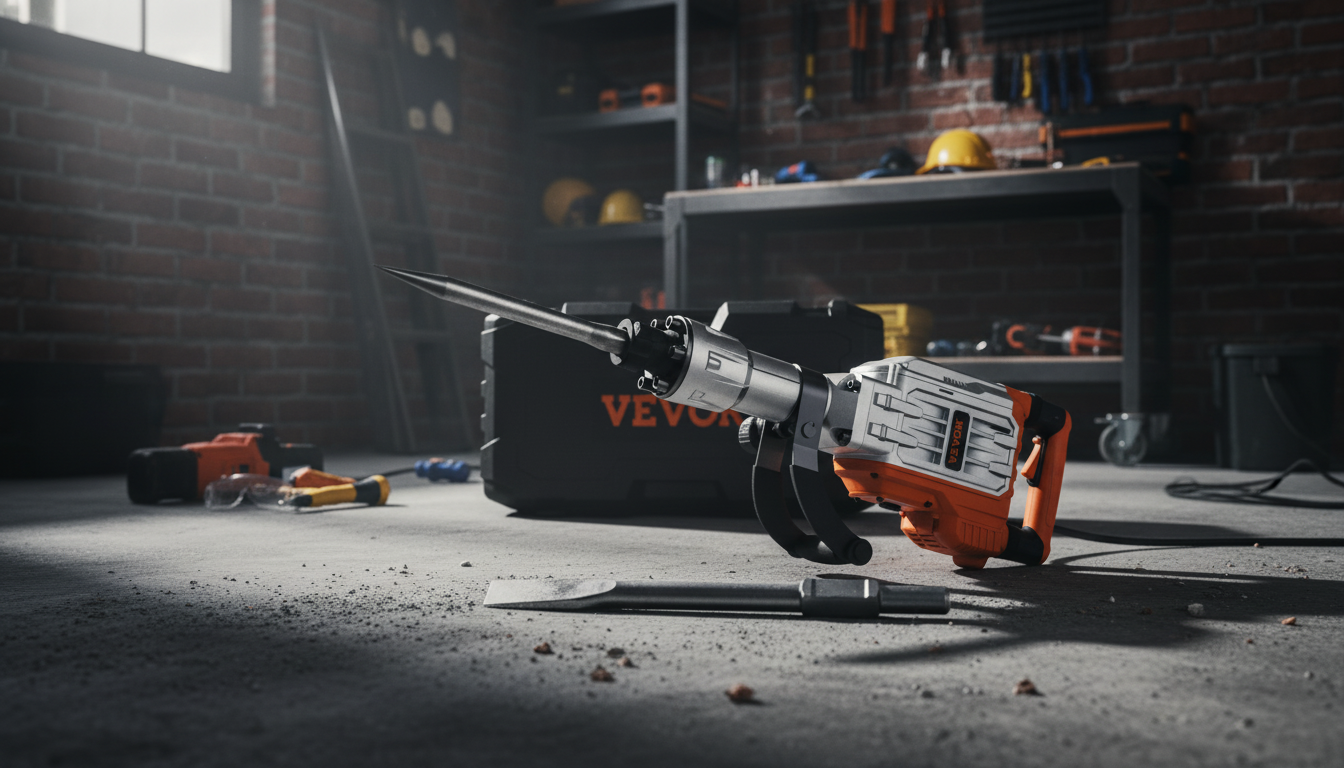
Tough slab, stubborn footing, or cracked walkway often calls for more than a sledgehammer. A high-powered electric demolition jack hammer delivers fast impact energy for breaking concrete, masonry, and stone while keeping control with the right stance, bit choice, and dust management. If you’re tackling repeated demolition work and want consistent output session after session, a corded breaker can be the most straightforward way to keep moving without waiting on batteries.
A demolition hammer earns its keep when the material fights back. Instead of relying on arm strength and swing speed, it converts motor power into rapid impacts that fracture concrete and mortar along weak points, letting you “walk” a break line with far less manual strain.
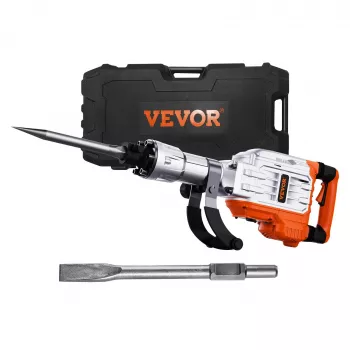
For a ready-to-go option, see the 3500W Electric Demolition Jack Hammer – 1900 BPM Concrete Breaker with 2 Chisels.
Concrete isn’t uniform: a thin walkway breaks differently than a dense, well-cured slab, and reinforcement changes everything. The specs below are the ones you’ll notice first when the chisel meets the work.
| Spec/feature | What it affects | Practical tip |
|---|---|---|
| 3500W motor | Power reserve in dense concrete | Use a heavy-gauge extension cord to reduce voltage drop on long runs |
| 1900 BPM | Break speed and rhythm | Work in short passes; reposition as cracks propagate |
| Corded electric | Runtime consistency | Plan cord routing to avoid trip hazards and keep connections dry |
| Chisel assortment (2) | Task versatility | Choose a pointed chisel to start fractures; switch to a flat chisel to lift and peel sections |
| Tool weight/handling | Operator fatigue and control | Use two-handed grip and a stable stance; take timed breaks to prevent overuse strain |
The fastest way to waste time is using the wrong chisel at the wrong stage. Think of the pointed chisel as your “starter” and the flat chisel as your “finisher.” Switching at the right moment can turn a stubborn slab into manageable pieces.
On big pours, a simple rhythm helps: punch in with the point to create a fracture network, then come back with the flat chisel to lift sections free and “peel” along the break.
Good setup often matters as much as wattage. Concrete breaks more predictably when you decide where it should fail and then guide impacts to make that failure happen.
One practical approach for patios and walkways is to work from the least-supported area toward the most-supported area. Edges, corners, and existing cracks usually open first, giving you a “handle” to steer the rest of the demolition.
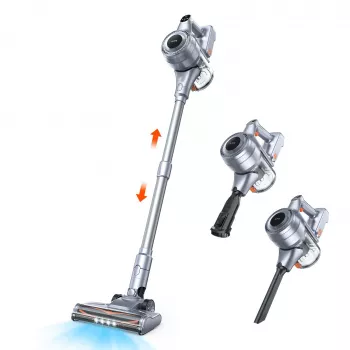
For cleanup after the heavy work, a compact tool like the Powerful Cordless Handheld Vacuum Cleaner with LED Light & 40-Min Runtime can help collect loose chips and dust from joints and corners before final sweeping or disposal.
Demolition is hard on lungs and hearing, and concrete chips don’t care where they land. Treat safety as part of your “tool setup,” not an afterthought—especially indoors or near neighbors.
For guidance on controlling silica exposure, reference OSHA’s Respirable Crystalline Silica standard and NIOSH information on silica in construction. For cord management and electrical safety basics, OSHA also provides a helpful overview on using extension cords safely.
1900 BPM refers to how many impacts the tool delivers per minute, but real breaking performance also depends on slab thickness, concrete mix, reinforcement, chisel choice, and technique. Starting at an edge or existing crack and using a pointed chisel first, then switching to a flat chisel as the break opens, typically improves efficiency.
A pointed chisel concentrates force to initiate fractures and is usually best to start the break. A flat chisel is better after cracks form, helping widen the break and lift or peel sections away.
Use wet methods when safe and feasible, or local exhaust/HEPA dust control if available, and keep bystanders away from the work zone. Wear a respirator appropriate for silica exposure and follow OSHA/NIOSH guidance for controlling respirable crystalline silica.





Leave a comment