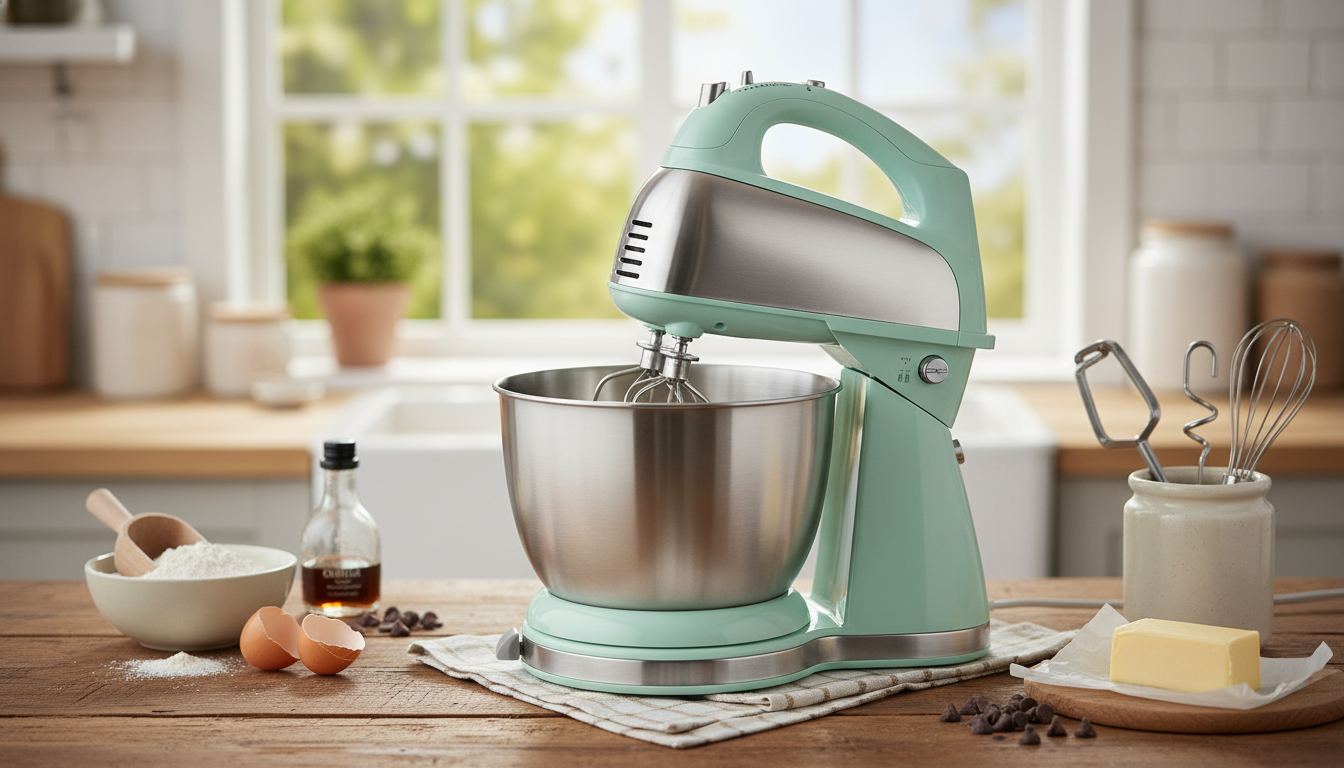
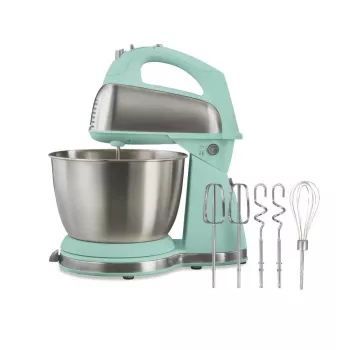
A compact mixer that can switch between stand-mixing stability and handheld flexibility covers a surprising range of everyday kitchen jobs. The Versatile 2-in-1 Stand and Hand Mixer, 4 Qt Stainless Steel Bowl, 6 Speeds is built for practical home use: common batters, whipped mixtures, frosting, and light savory mixing—without taking up the space of a full-size stand mixer. Below are the key details to help match the mixer’s strengths to the way you cook and bake.
| Feature | Details |
|---|---|
| Product | Versatile 2-in-1 Stand and Hand Mixer |
| Bowl capacity | 4 qt stainless steel bowl |
| Speed settings | 6 speeds |
| Availability | In stock |
| Price | $66.51 (USD) |
The biggest advantage of a 2-in-1 design is momentum: you can keep moving through a recipe without switching appliances or washing extra tools.
A 4-quart bowl lands in a sweet spot for typical home baking—big enough for most weeknight and weekend projects, without feeling bulky to store. Expect it to be comfortable for cookie dough, cake batter, mashed potatoes, and whipped cream.
Stainless steel is widely appreciated in kitchens for durability and for resisting staining and odor retention. For background on stainless steel’s common food-contact use, the Nickel Institute offers an overview of stainless steel in food and beverage contexts here: https://nickelinstitute.org/about-nickel/stainless-steel/.
Six speeds give useful control, but results depend on how you ramp up. A reliable approach is to start low to prevent flour “puffing” and splatter, then increase gradually as ingredients come together.
| Task | Recommended approach |
|---|---|
| Stirring in flour or cocoa | Start at the lowest speed; mix just until combined. |
| Creaming butter and sugar | Use a mid speed; scrape sides for even texture. |
| Cake batter | Mix on low to combine, then mid speed briefly; avoid overmixing. |
| Whipped cream | Increase gradually to higher speeds; stop at soft or stiff peaks as needed. |
| Egg whites/meringue | Use higher speeds after foamy stage; keep bowl and tools clean and dry. |
For egg-based mixtures, safe handling matters just as much as technique. The USDA’s guidance on egg products and food safety is a helpful reference: https://www.fsis.usda.gov/food-safety/safe-food-handling-and-preparation/eggs.
Multipurpose mixers shine in variety, but they’re not meant to replace heavy-duty dough machines in every scenario.
For broader best practices related to cleanliness and food-contact surfaces, the FDA Food Code is a useful general reference: https://www.fda.gov/food/fda-food-code/food-code-2022.
Mixing often goes hand-in-hand with measuring and pouring oils, vinegars, and sauces. If you like keeping essentials on the counter, the Japanese Ceramic Oil Dispenser – Retro Soy Sauce & Vinegar Pot is a simple companion item for dressing, marinades, and quick sauté prep.
For many households, yes—4 quarts is well-suited to standard cookie dough, typical cake batters, and whipped mixtures like cream or frosting. If you frequently make large bread batches or multiple loaves at once, a larger-capacity mixer may be a better fit.
Use low speeds to incorporate dry ingredients, mid speeds for creaming and most batters, and higher speeds for whipping tasks like cream or egg whites. Starting low and increasing gradually helps reduce splatter and prevents overmixing.
It can mix some doughs depending on stiffness and batch size, especially softer or higher-hydration dough. Very dense dough and long kneading sessions are typically better handled by a dedicated stand mixer designed for heavier dough work.



Leave a comment