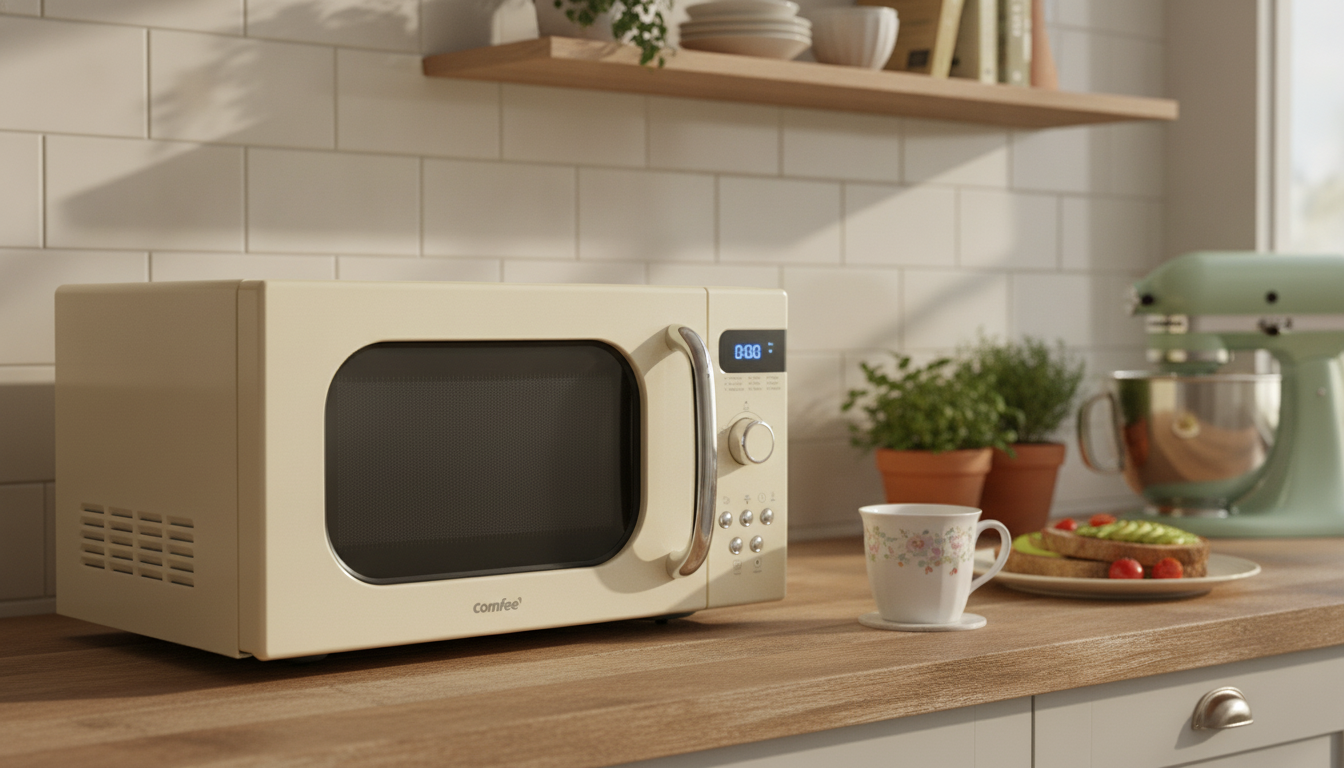
A compact microwave with a retro look can be a practical upgrade for small kitchens, dorms, offices, and studio apartments—especially when it includes one-touch presets, a memory function, and a turntable sized for everyday bowls and plates. This guide breaks down what matters most: capacity, power, controls, fit on the counter, and simple care routines for reliable daily heating and reheating.
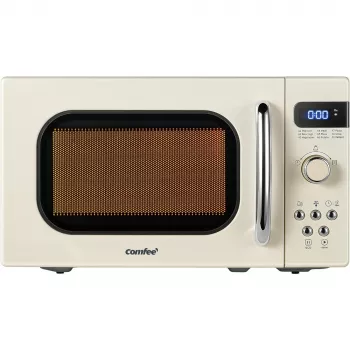
If you want a small, style-forward option that still covers day-to-day basics, the Retro Compact Microwave Oven – 700W, 9 Presets, Memory Turntable, 0.7 Cu Ft is built around the core features most people actually use: quick reheat, straightforward defrost, and repeatable settings.
A 0.7 cu ft microwave is a classic “small-but-functional” size. It’s usually the sweet spot for 1–2 people who reheat leftovers, warm drinks, or make quick foods like oatmeal and soup without dedicating a big chunk of counter space to an appliance.
| Need | What to look for | 0.7 cu ft fit |
|---|---|---|
| Reheating leftovers and drinks | Simple controls, turntable, easy-to-clean interior | Excellent |
| Quick meals for one (soup, oatmeal, frozen snacks) | Presets, reliable defrost, enough plate clearance | Very good |
| Family-sized dishes and large casserole pans | Larger cavity and higher wattage | Limited |
| Small-space living (dorm/studio/RV with counter space) | Compact footprint, lighter weight, straightforward operation | Excellent |
Microwave wattage is mostly about speed and margin for dense foods. At 700W, everyday reheating is easy, but it may take a little longer than the 900–1100W models common in larger kitchens.
For food safety, it also helps to heat thoroughly and check for cold spots—especially with leftovers that are thick, layered, or packed tightly. Guidance from the USDA Food Safety and Inspection Service is a reliable reference for safe microwave reheating habits.
Presets aren’t just flashy buttons when they’re tuned for common tasks. They can reduce the “guess and restart” cycle that leads to overcooked edges and cold centers—especially in a smaller microwave where portions tend to be compact and consistent.
A practical way to use memory is to “dial in” your most frequent routine—like a specific bowl of soup or a particular mug size—then repeat it with minimal button presses on busy mornings.
A turntable is still one of the simplest ways to improve real-world heating. By rotating the dish, it changes the food’s position relative to the microwave energy pattern, which can reduce hot spots and help edges and centers warm more evenly.
Microwave safety also includes using the appliance as designed and in good condition. For a clear overview of microwave radiation safety basics, the FDA’s microwave oven radiation page is a helpful resource.
To lean into the same vintage-inspired feel on the counter, consider pairing it with a coordinated tabletop piece like the Japanese Ceramic Oil Dispenser – Retro Soy Sauce & Vinegar Pot for everyday cooking and serving.
Often yes for compact plates, but it depends on your plate’s diameter and whether it can rotate freely. Measure your most-used plate and make sure it won’t touch the walls while the turntable spins.
Food can heat unevenly due to shape, thickness, and density creating hot and cold areas. Stir halfway, use shorter heating cycles with a brief rest, and place thicker portions toward the outer edge for more balanced results.
Microwave-safe glass and ceramic are typically the most reliable choices. Use plastics only when labeled microwave-safe, and avoid metal, foil, or any dishware with metallic trim; vent covers and lids to prevent pressure buildup.



Leave a comment