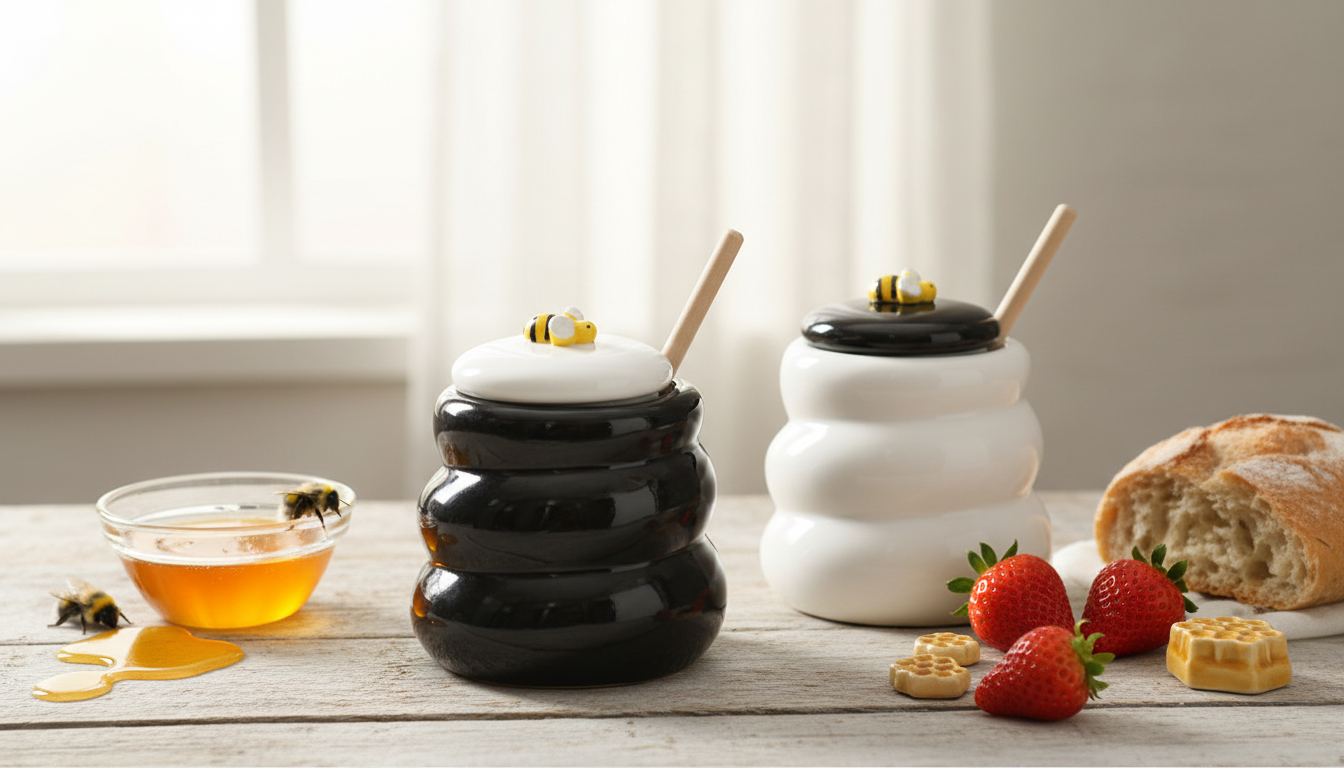
A dedicated honey jar keeps the countertop tidy, helps prevent sticky drips, and makes it easier to portion honey for tea, toast, yogurt, and baking. A ceramic container paired with a fitted lid and wooden dipper offers a classic look while keeping honey accessible and protected between uses.
Honey tends to “travel”—from bottle threads to lids to fingertips—especially when it’s used daily. A purpose-built jar keeps everything organized in one spot so you can sweeten quickly without leaving a trail behind.
Ceramic is a countertop-friendly material because it feels steady, looks intentional, and is generally easy to keep presentable—important for something that may be handled several times a day.
The simplest honey routine is the one that contains stickiness from the start. A lid and dipper work together so the honey stays covered, and the serving tool is designed for drizzling rather than scooping.
For the cleanest pour, dip straight down, lift slowly, pause over the jar for a beat to let excess fall back in, then drizzle where you want it. That quick pause is often the difference between a neat rim and a sticky one.
Choose based on how often honey is used, where it will sit (counter vs cabinet), and whether it will be used mostly for cooking or table service. Consider how easy the opening is to access with the dipper and how the lid sits during use.
| Option | Best for | Pros | Trade-offs |
|---|---|---|---|
| Ceramic jar with lid + wooden dipper | Daily countertop use and serving | Stable, tidy setup; controlled drizzle; decorative | Needs occasional wipe-down; dipper needs cleaning |
| Squeeze bottle | Quick use for kids and lunches | Fast dispensing; lightweight | Can get messy at the cap; less precise for drizzling |
| Original honey bottle/jug | Low-frequency use or bulk storage | No transfer needed; large capacity | Less elegant for serving; repeated opening can get sticky |
| Glass jar with spoon | Pantry storage and occasional serving | Easy to see level; non-porous | Spoon can drip; lid often off during use |
Small placement tweaks can make honey feel effortless (and keep cleanup minimal), especially if you use it every morning.
For entertaining, the jar-and-dipper setup reads as intentional on a breakfast table or brunch board. It also reduces the need to pass around a sticky plastic bottle.
A few quick habits help keep the set looking fresh and working smoothly.
For additional guidance, see the National Honey Board for general storage tips and the CDC’s botulism prevention guidance regarding honey and infants.
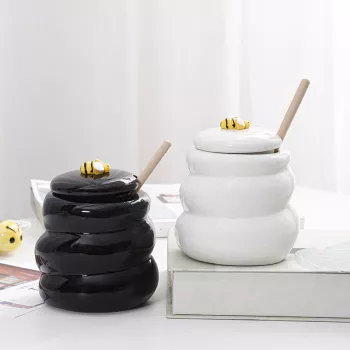
For a simple, everyday setup, the Ceramic Honey Jar with Lid and Wooden Dipper – Kitchen Storage Container is designed as a matched set for neat storage and easy drizzling. It’s a decorative piece that can stay out on the counter for breakfast, tea time, and casual entertaining—while keeping honey covered and ready to serve.
If you’re refreshing the look of a breakfast nook or beverage station, pairing functional ceramics with subtle décor can make the space feel finished. Consider adding Golden Flowers Decorative Vinyl Wall Stickers – Elegant Home Decor nearby for an easy, light-touch update that complements a clean countertop setup.
Rinse it promptly after use, wash with mild soap, and avoid long soaking. Dry it thoroughly before storing to help prevent warping or lingering odors.
Crystallization is common and usually natural. Set the jar in warm water and wait (or stir gently) until it loosens, avoiding overheating or sudden temperature changes.
Yes for most households, as long as it stays covered and away from heat and splatter. Keep the lid on between uses and wipe the rim occasionally to prevent stickiness.

Leave a comment
You must be logged in to post a comment.