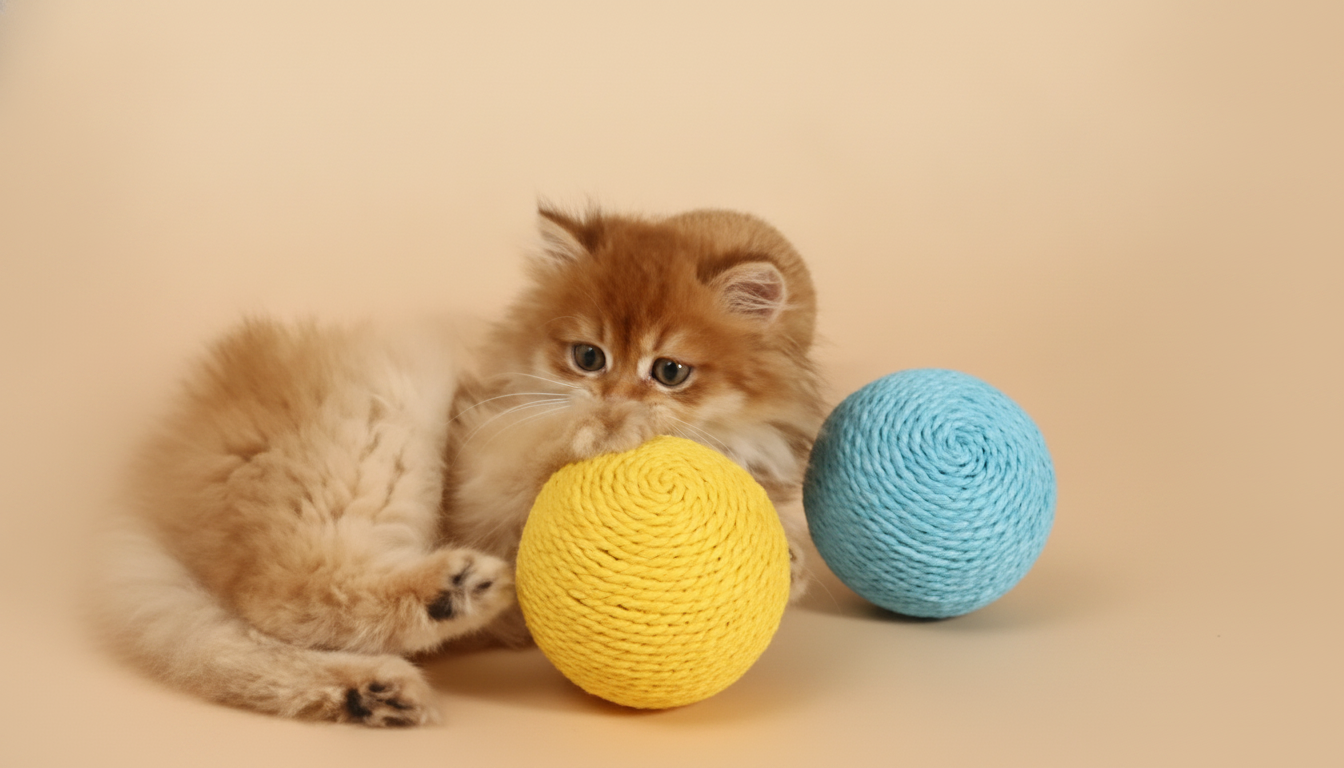
Cats need a safe way to scratch, chase, and burn off energy indoors—especially in homes where space is limited or outdoor time isn’t an option. A sisal-wrapped scratching ball that rolls and makes sound blends two everyday cat needs into one simple toy: satisfying scratch texture plus movement-driven play. The result is a compact, low-effort way to keep paws busy and help steer attention away from couches, rugs, and door frames.
A sisal scratching ball is a rolling toy wrapped in durable sisal fiber—the same rough, grippy material many cats already enjoy on scratching posts. Unlike a stationary scratcher, the ball shape invites a cat to bat, chase, and pounce, then scratch as part of the same “hunt” sequence. That mix can be especially helpful for indoor cats that need more daily movement.
Many versions also include a built-in sound (often a gentle rattle). For cats that respond to auditory cues, the noise acts like a “come investigate” signal, helping the toy stay interesting longer than silent objects that don’t change. During play, scratching can also support natural marking behavior and help remove the outer sheath of the claws in an appropriate spot—an important part of normal feline care and communication. For broader scratching guidance, International Cat Care’s overview is a useful reference: https://icatcare.org/advice/scratching/.
Indoor life is safer in many ways, but it can also be understimulating. A rolling sisal ball is designed for quick, repeatable play that fits into real routines—between meetings, while dinner cooks, or during a short “energy reset” in the evening.
| Situation | What to Do | Why It Helps |
|---|---|---|
| Cat scratches the couch corners | Place the ball near the couch and reward use | Creates a convenient alternative with a preferred texture |
| Nighttime zoomies | Schedule two short play sessions earlier in the evening | Helps shift energy release to a predictable time |
| Single indoor cat gets bored | Rotate the ball in and out every few days | Keeps novelty higher and reduces toy fatigue |
| Kitten with sharp claws | Offer the ball after meals and naps | Builds a consistent habit around scratch-appropriate items |
| Shy cat avoids wand play | Roll the ball gently nearby and let the cat approach | Lower-pressure interaction can feel safer |
Not all scratching balls perform the same once they hit your floor. A good option should feel satisfying under the paw, roll in a predictable way, and hold up to daily claw contact.
Providing scratch-appropriate options is also one reason many cat welfare groups emphasize environmental management over surgical solutions. For context on declawing and why scratching needs are important, see the AVMA policy overview: https://www.avma.org/resources-tools/avma-policies/declawing-domestic-cats.
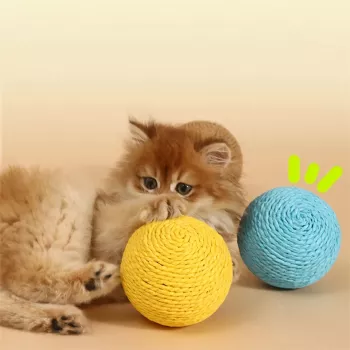
If you want a straightforward way to combine scratch texture with rolling play, the Interactive Sisal Cat Scratching Ball with Sound is designed for exactly that: batting, chasing, and scratching in one compact toy. It can be especially useful as a quick-play option between longer interactive sessions (like wand play), and it’s easy to move near problem scratching areas for habit-building.
| Detail | Value |
|---|---|
| Product | Interactive Sisal Cat Scratching Ball with Sound – Fun and Engaging Toy for Cats |
| Price | $5.01 USD |
| Availability | In stock |
If your cat has already left a few scuffs around the house, refreshing the look of a wall area can make the space feel new again while you work on better scratching habits. For a decorative touch, consider Golden Flowers Decorative Vinyl Wall Stickers – Elegant Home Decor as a simple way to update visible spots (while keeping the scratching ball nearby as the preferred alternative).
Yes for most kittens, as long as the ball is an appropriate size and you monitor early play. Kittens scratch to help shed claw layers and build lifelong habits, so offering a scratch-friendly toy early can be beneficial; replace it if you notice heavy fraying.
Place the scratching toy right at the problem spot, reward your cat for using it, and temporarily cover or block the furniture corner to reduce “practice” on the wrong surface. Keep nails trimmed and stay consistent—changing scratching habits usually takes time and repetition.
Start with the ball stationary for sniffing, then roll it gently so the sound is minimal, pairing each interaction with treats. If your cat remains fearful after several calm introductions, switch to a silent scratcher and focus on the sisal texture without added noise.


Leave a comment
You must be logged in to post a comment.