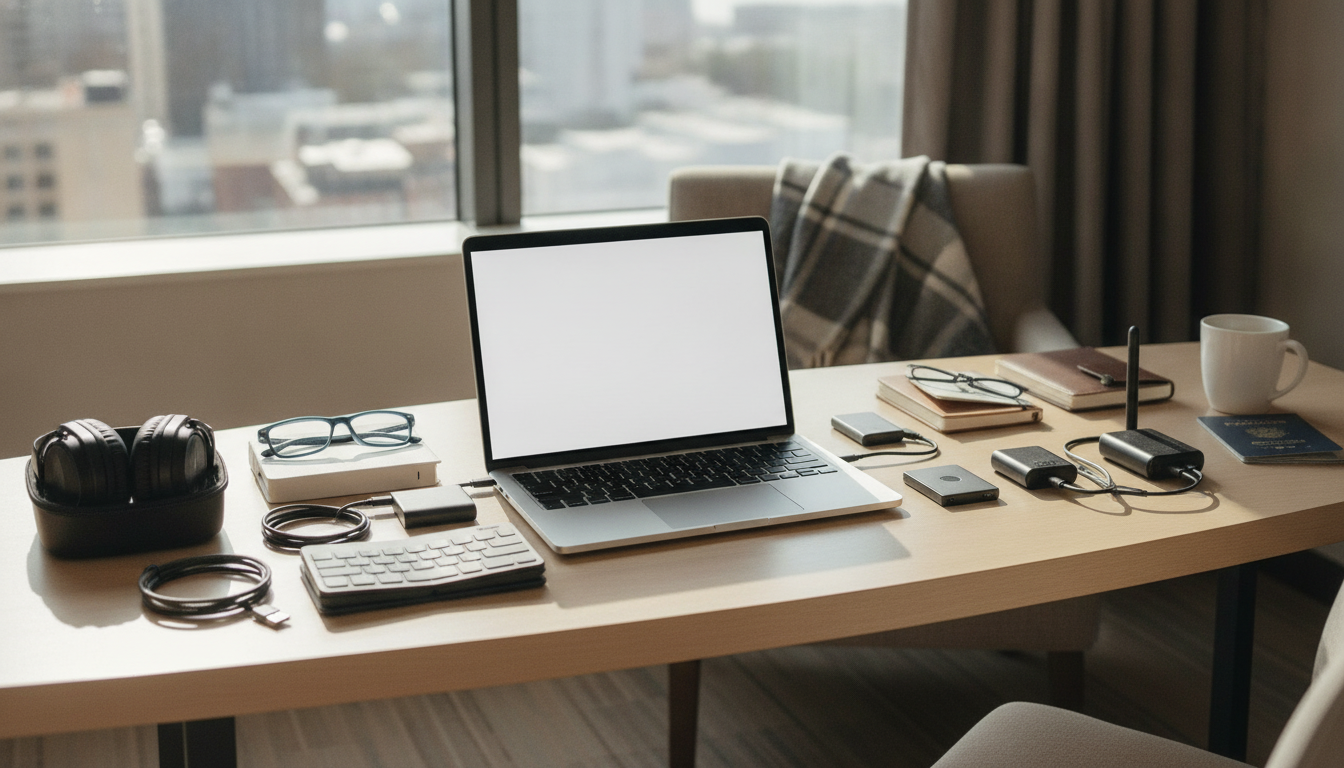
Remote work from cafés, coworking spaces, airports, and short-term rentals runs smoother with a compact setup built for power, connectivity, comfort, and security. The goal isn’t to carry a full office—it’s to pack a dependable kit that prevents the most common failure points: dead batteries, unstable Wi‑Fi, painful posture, and exposed data. Below is a practical framework for choosing travel-ready gear, plus a repeatable packing routine you can use on every trip. For more guidance, see Conference Proceedings.
Power problems are predictable while traveling: one outlet behind a bed, a café with no plugs, or a long gate delay. Build a charging setup that can handle your laptop plus essentials without turning your bag into a brick. For further reading, see Introduction to Sociology 3e.
| Need | Gadget examples | What to look for | Common mistakes |
|---|---|---|---|
| Reliable power | Multi-port USB-C charger, power bank, travel adapter | USB-C PD, sufficient wattage, safety certifications | Underpowered chargers, too many cable types |
| Stable internet | Mobile hotspot, travel router, Ethernet adapter | Carrier flexibility, VPN support, easy setup | Relying on public Wi‑Fi without protection |
| Comfort | Portable stand, compact keyboard/mouse, seat cushion | Lightweight, adjustable angles, wrist support | Working hunched over for long sessions |
| Clear calls | Noise-isolating earphones or ANC headphones, external mic | Good mic pickup, comfort, stable connection | Using laptop mic in noisy spaces |
| Data safety | Encrypted drive, cloud backup, privacy screen | Encryption, fast transfer speeds, proven brands | No backups, weak passwords, shoulder-surfing risk |
Connectivity failures tend to happen at the worst time: interviews, client calls, or live demos. The fix is a layered approach—your “Plan A” plus at least one viable fallback.
Travel workstations push bad posture: low coffee tables, soft couches, chairs with no support. Small upgrades compound over a long trip and help you stay consistent.
Clear audio reduces misunderstandings, repetition, and meeting fatigue—especially when you’re calling from public spaces. Choose call gear for microphone performance first, then comfort.
If you want a durable, travel-friendly audio option for calls and focused work, consider Hi-Res Dynamic In-Ear Earphones with MMCX Cable & Dual Plug Options.
For practical guidance on safe backups and wireless network habits, see NIST: Back Up Your Data and CISA: Securing Wireless Networks.
Available here: Must-Have Travel Gadgets for Remote Professionals (digital download).
Prioritize power (a USB‑C PD charger plus a power bank), connectivity (a hotspot option and/or travel router), comfort (a stand plus mouse/keyboard), and security (VPN and reliable backups). Choose compact gear and add redundancy where failure would cost work time.
Use a reputable VPN, enable multi-factor authentication, and keep devices encrypted with strong passwords stored in a password manager. When possible, avoid sensitive tasks on open networks and use a travel router to create a more private connection.
Consolidate chargers and cable types, pick multi-use tools, and pack by pouches so essentials stay organized. Keep only the items that prevent delays—power, stable internet, clear audio, and backup access to key files.





Leave a comment