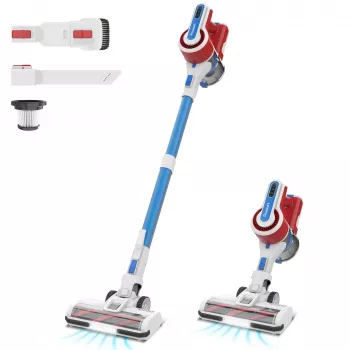
“Good suction” for a cordless vacuum is typically measured in kilopascals (kPa) or air watts (AW). For everyday home cleaning, a cordless vacuum in the 18–25 kPa range is generally considered strong. If the model can reach 25–30 kPa on a higher power mode, that’s a solid sign it can handle tougher jobs like embedded dust in rugs, heavier debris, and messes along baseboards and carpet edges.
Suction specs matter, but real “good suction” shows up in performance: picking up fine dust in one or two passes, pulling grit out of low-pile carpet without repeated back-and-forth, and maintaining airflow even as the bin fills. A well-designed floor head and sealed filtration can make a noticeable difference, since suction at the motor doesn’t always equal suction at the nozzle.
For hard floors and quick daily pickups, 15–20 kPa can be plenty—especially if the brush roll and airflow are efficient. For mixed flooring (hard floors plus area rugs), aim for 20–25 kPa. If the home has wall-to-wall carpet, lots of tracked-in debris, or frequent heavy-duty cleaning, look for models that can hit 25 kPa+ with a turbo/boost mode for short bursts.
Maximum suction often drains the battery quickly, so a “good” cordless vacuum balances strong everyday suction with a usable runtime. A practical setup is a normal mode for most cleaning and a boost mode reserved for problem spots—so you get power when it counts without constantly recharging.
For a deeper look at suction ratings and what they mean for fast daily cleaning, see the main guide here: https://idyllie.com/guide-v80-26kpa-cordless-vacuum-fast-daily-cleaning-power/.
Both can be useful, but air watts often reflects usable cleaning power because it combines suction and airflow. kPa is great for understanding pull strength, especially for carpets and tight gaps, while AW can be a better “overall” comparison when brands report it consistently.




Leave a comment
You must be logged in to post a comment.