Rustic Wooden Play Kitchen for Kids (3+) with Lights
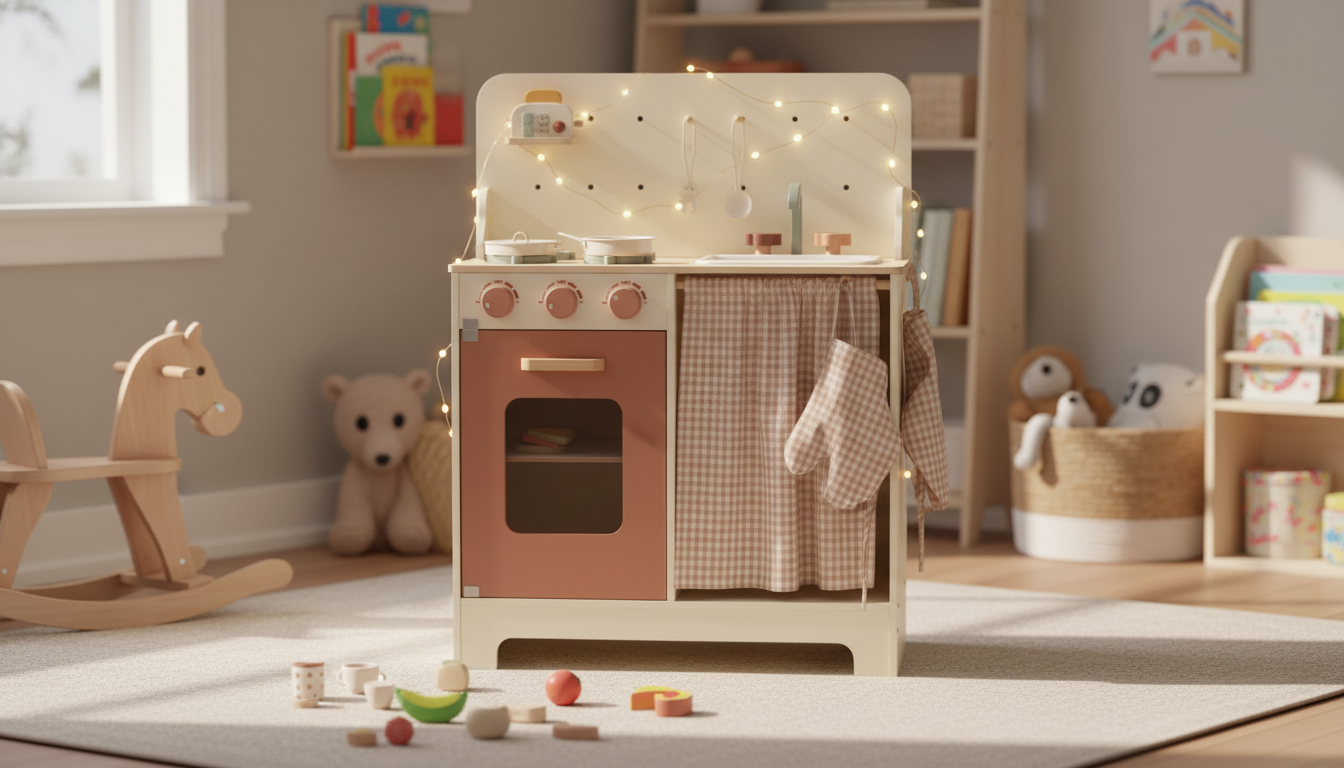
Rustic Kids Wooden Play Kitchen Set with Light String, Apron, and Gloves (Ages 3+)
A rustic-style wooden play kitchen can turn everyday pretend cooking into a cozy, screen-free routine. This set pairs a warm farmhouse look with playful details—like a light string plus an apron and gloves—so kids can jump straight into role-play, build confidence with everyday routines, and practice sharing during cooperative play.
What Makes This Rustic Play Kitchen Feel Special
- Rustic, homey design: The farmhouse-inspired look fits naturally into playrooms and shared living spaces without the bright, overly plastic feel of many playsets.
- Light string detail: Adds a gentle “real kitchen” atmosphere for imaginative scenes like a café counter, bakery display, or family dinner service.
- Apron and gloves included: Wearable pieces encourage dress-up role-play and help kids stay “in character” while they cook, serve, and clean.
- Wooden construction: Wood typically feels sturdier and more furniture-like than lightweight options, helping the play kitchen feel like a true centerpiece.
- Made for ages 3+: Great for growing independence and longer play sessions, whether solo or with siblings and friends.
What’s Included and How Kids Use It
This set is designed to support the full pretend-meal routine—start to finish—so play feels immersive instead of scattered.
- Play kitchen base: The “home base” for prepping, “cooking,” plating, serving, and tidying up at the end.
- Light string: A small detail that changes the mood fast—think holiday meals, restaurant ambiance, or a bedtime snack stand.
- Apron: Helps kids choose a role identity (chef, baker, parent, barista, food truck owner) and stay engaged through longer storylines.
- Gloves: Adds pretend safety and realism for “hot tray” delivery, oven-mitt moments, or bakery work.
- Open-ended compatibility: Kids can pair it with toy food, cups, utensils, and pretend cookware they already own, keeping play fresh without needing a huge add-on bundle.
Skills This Pretend Kitchen Can Support (Without Feeling Like Homework)
Pretend play has real developmental value, especially when kids lead the story. The American Academy of Pediatrics highlights play as essential to healthy development, supporting social-emotional skills and resilience (AAP: The Power of Play).
- Language growth: Naming ingredients, describing steps, taking “orders,” and narrating what happens next.
- Social-emotional development: Turn-taking, cooperation, and empathy through hosting, serving, and “checking in” with guests.
- Early math concepts: Counting items, sorting ingredients, comparing sizes, and sequencing steps (first/next/last).
- Practical life routines: Clean-up habits, organizing play items, and building independence through familiar daily patterns.
- Fine-motor practice: Grasping, placing, rotating, and arranging accessories (with age-appropriate pieces and supervision).
Safety and Setup Notes for Ages 3+
A thoughtful setup helps kids play longer and helps caregivers feel more comfortable with daily use. For general toy safety guidance, the U.S. Consumer Product Safety Commission is a helpful reference point (CPSC Toy Safety).
- Choose a stable spot: Place the kitchen on a level surface with clear space around it for safe movement and shared play.
- Use lighting as directed: Confirm any included lights/strings are used according to instructions and kept out of reach of younger siblings.
- Keep accessories age-appropriate: Avoid small parts for children under 3, and store tiny pieces separately if toddlers are around.
- Do quick checkups: Periodically check for loose hardware or wear, especially if the kitchen is used daily.
- Model early routines: Supervise the first sessions to demonstrate gentle handling, sharing language (“my turn/your turn”), and a simple cleanup routine.
Quick Comparison Checklist
- Best for: Imaginative role-play, sibling play, and cozy “home kitchen” scenarios
- Standout extras: Light string plus wearable accessories (apron and gloves)
- Style fit: Rustic/farmhouse décor themes
- Age guidance: 3+
- Giftability: Strong pick for birthdays and holidays because play starts immediately with dress-up pieces
At-a-Glance Buying Checklist
| What to Check | Why It Matters | Good Fit For |
|---|---|---|
| Overall footprint and play space | Helps prevent cramped play and supports safer movement | Apartments, playrooms, shared family rooms |
| Wearable accessories (apron, gloves) | Boosts role-play and keeps kids engaged longer | Kids who love dress-up and pretend jobs |
| Lighting details (light string) | Adds atmosphere and extends pretend scenarios | Café/bakery play, “family dinner” storytelling |
| Ease of cleanup and storage | Encourages independence and reduces clutter | Families building tidy-up routines |
| Age-appropriate accessories | Supports safe play and reduces choking risks | Homes with younger siblings nearby |
Ideas to Keep Play Fresh All Year
Product Details and Where to Find It
- Product name: Rustic Kids Wooden Play Kitchen Set with Light String, Apron, and Gloves – Pretend Play Kitchen for 3+
- Price listed: 134.01 USD
- Availability: In stock
Helpful Add-On for Cleanup Routines
FAQ
What age is this play kitchen best for?
It’s designed for ages 3+, which aligns well with preschool independence and longer pretend-play storylines. Older preschoolers and early elementary kids can still enjoy it for cooperative play, while younger siblings should be supervised due to small accessories.
Are the apron and gloves just decorative, or do kids actually use them?
Kids tend to use wearable pieces constantly because they make the role feel “real,” whether they’re playing chef, baker, or restaurant owner. Keeping the apron and gloves on a nearby hook or in a basket helps them become part of the everyday play routine.
How can the light string be used safely during play?
Follow the included directions, keep any cords or battery components secured, and supervise use—especially in homes with toddlers. Turn the lights off during storage and keep the lighting element out of reach of children under 3.















Leave a comment