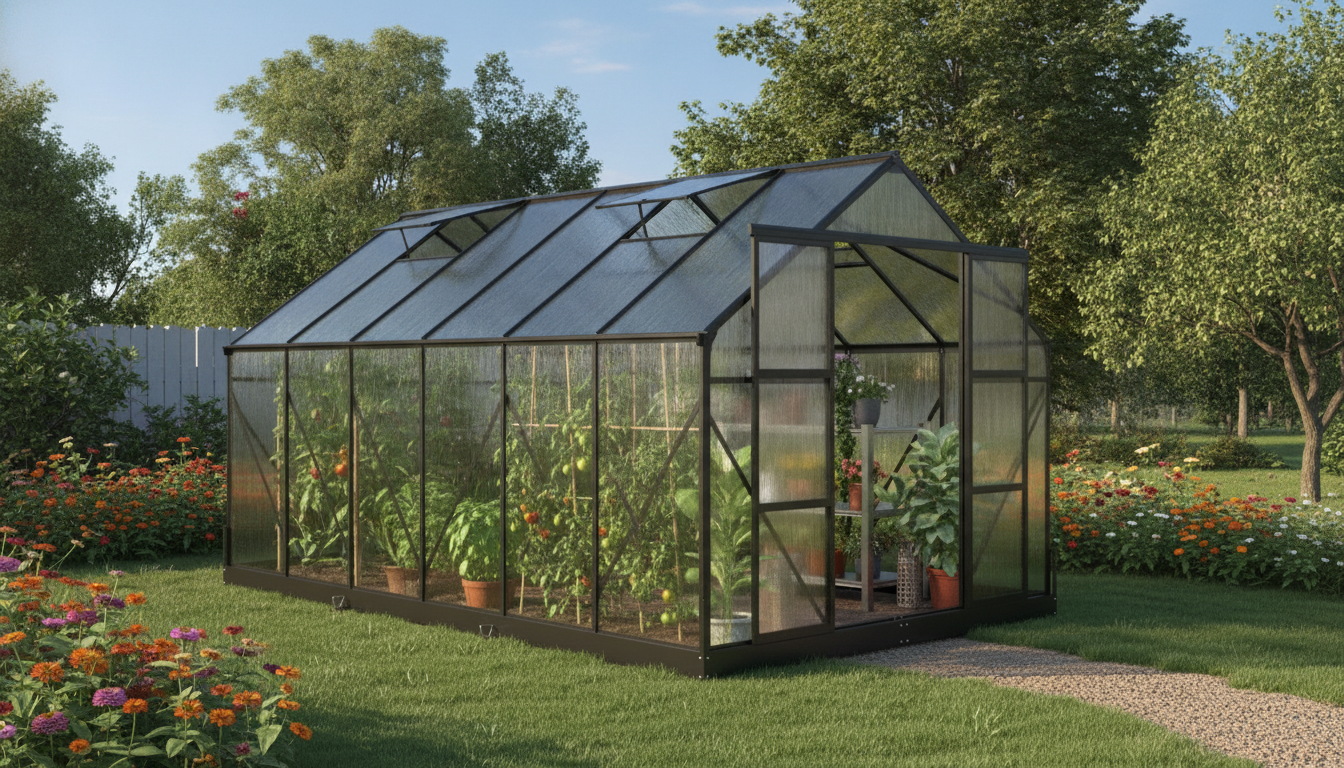
A roomy 8×14 greenhouse can turn a backyard corner into a reliable growing space for seedlings, herbs, vegetables, and overwintering plants. Polycarbonate panels help diffuse light and hold warmth, while sliding doors and vent windows make daily temperature and humidity control simpler during shoulder seasons and hot spells. If you’re aiming for more consistent harvests—and less weather guesswork—this size is a practical step up without feeling overwhelming to manage.
An 8×14 footprint gives enough square footage to grow seriously while keeping daily tasks comfortable. The 7.5 ft peak height supports taller crops and vertical setups, and the sliding doors plus four vent windows help you steer heat and humidity without relying on constant powered fans.
Polycarbonate is a workhorse material for backyard greenhouses because it balances light, warmth, and durability. Diffused light can make the interior feel less “spotlit,” which is useful when you’re growing mixed trays with different heights and leaf structures.
Climate still matters. Before planning winter crops, check your zone and typical winter lows using the USDA Plant Hardiness Zone Map, and consider guidance from university extensions such as University of Minnesota Extension for greenhouse vegetable timing and management.
A sliding door is a small feature that can have an outsized impact on usability. When your greenhouse sits near a fence, a raised bed, or a narrow path, not needing clearance for a swing door makes the entrance feel instantly less cramped.
For a greenhouse built around everyday convenience—easy in, easy out—see the 8x14x7.5 FT Polycarbonate Greenhouse with Sliding Doors and 4 Vent Windows.
Vents are your main “steering wheel” for temperature and moisture. Consistent airflow helps prevent stagnant, humid pockets that can encourage common greenhouse issues like powdery mildew and botrytis. The key is to vent proactively—once plants are heat-stressed, you’re already playing catch-up.
| Season | Morning routine | Midday routine | Evening routine |
|---|---|---|---|
| Early spring | Crack door/vents once sun hits the panels | Vent more if interior feels stuffy or condensation forms | Close vents before outside temps drop |
| Summer | Open vents early; consider door partially open | Maximize venting; add shade if plants wilt | Keep some airflow until heat fades; close only if nights are chilly |
| Fall | Vent briefly to clear overnight humidity | Adjust based on sun and wind | Close earlier to hold warmth |
| Winter (unheated) | Vent only if interior is dripping wet | Short bursts of ventilation when temps allow | Close tightly before dusk |
For general greenhouse care and seasonal routines, practical references like the Royal Horticultural Society greenhouse guide are helpful when you’re dialing in vent timing, cleaning, and crop turnover.
If your greenhouse becomes the center of your backyard routine, pairing it with a convenient outdoor cooking setup can make long planting days more enjoyable—consider the 12″ Portable Outdoor Tri-Fuel Pizza Oven with Rotating Stone for quick meals without running inside constantly.
Polycarbonate helps retain warmth and can extend your growing season, but true year-round growing depends on your winter lows, sun exposure, wind, and whether you add supplemental heat or thermal mass. In colder zones, it’s often used for season extension rather than fully unheated winter production.
Open vents early to release humid air before it turns into heavy condensation, and ventilate in short bursts even in cool weather when temperatures allow. Avoid overwatering, and add gentle airflow (like a fan) during damp stretches to reduce dripping on foliage.
A level, rigid, and anchored base—such as a treated lumber frame, concrete perimeter, or well-set pavers—helps keep the structure square so the sliding doors stay aligned. A solid foundation also improves wind resistance and helps panels and vents seat properly.





Leave a comment
You must be logged in to post a comment.