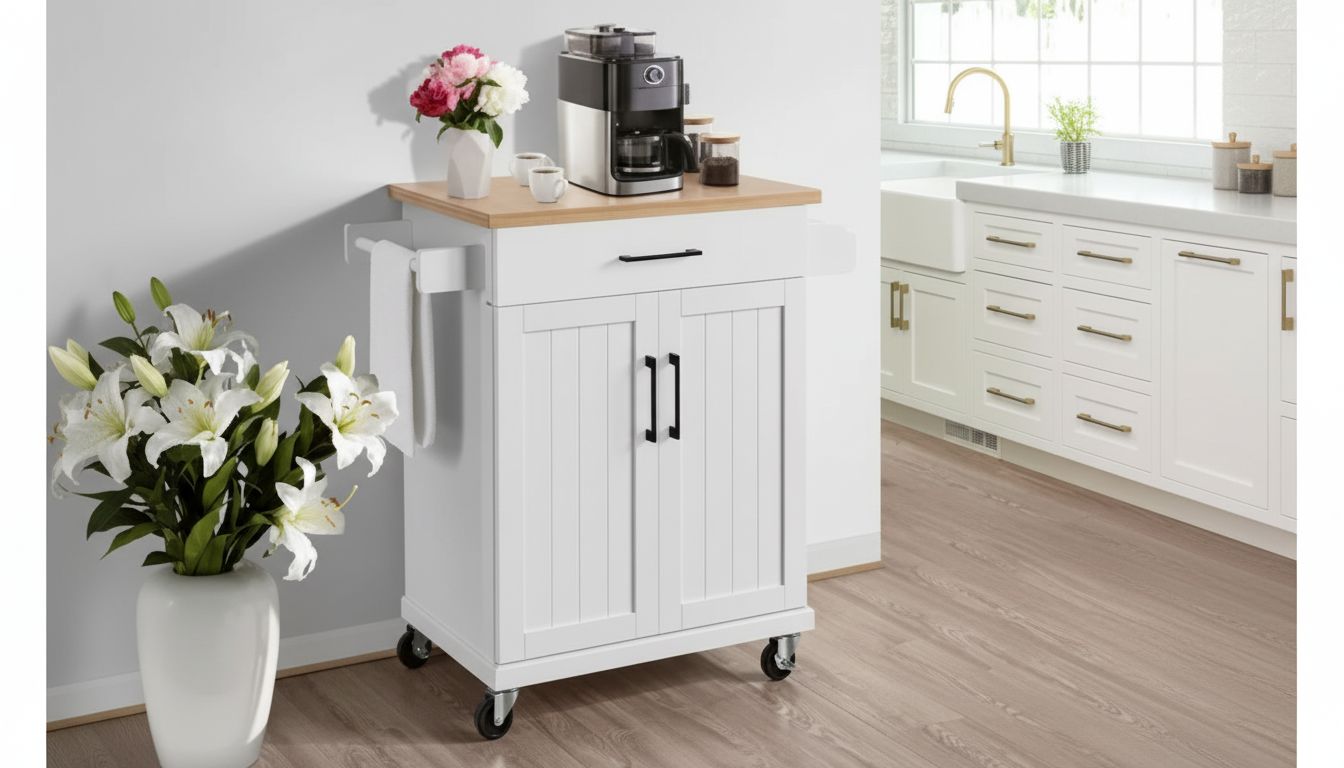
A kitchen cart works best when it carries the things you reach for often but don’t want clogging your main counters. Start by choosing a “job” for the cart—extra prep space, a portable pantry, a coffee bar, or an everyday storage hub—then stock it with a focused set of items that support that role.
Keep the top clear enough to be useful. A good baseline is a cutting board or butcher-block mat, a small utensil crock with your most-used tools (spatula, tongs, wooden spoon), and a salt-and-pepper set. If the cart has a heat-safe top, a small appliance you use daily—like a toaster or electric kettle—can live here, but leave a “landing zone” for plates and prep.
Use drawers for compact, easy-to-misplace items: measuring spoons, peelers, can openers, lighters, bag clips, and small packets. On open shelves, group items by purpose: a mixing bin (whisk, bowl scraper, hand mixer accessories) or a baking bin (parchment, muffin liners, rolling pin). If you store food, choose stable staples that don’t mind being moved—oils, vinegar, onions, potatoes, or snack baskets—rather than fragile glassware.
Add a tray to corral bottles, a small bin for dish towels, and a hook or side rail for oven mitts. If the cart rolls, avoid tall, top-heavy items and keep heavier goods (like canned foods) on the bottom shelf. A small non-slip liner in drawers and on shelves helps prevent shifting when you move it.
For more ideas on choosing and organizing a cart with drawers and storage, see the full guide here: https://idyllie.com/guide-kitchen-cart-with-drawer-storage-organize-roll-anywhere/.
Assign the cart a single purpose (prep, pantry, coffee, baking) and limit it to a few categories. Use trays and bins to group items, and leave part of the top surface empty for daily tasks.



Leave a comment