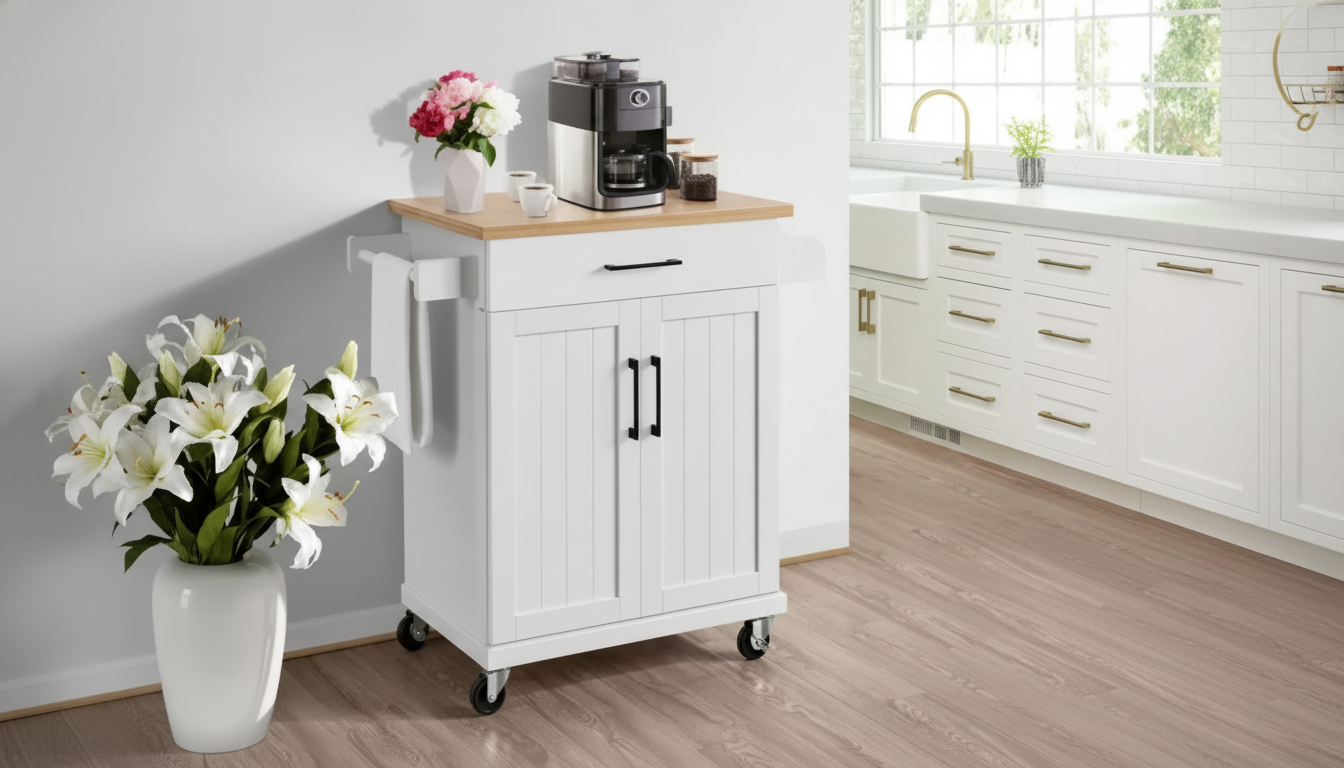
A kitchen cart with a drawer and enclosed storage keeps everyday tools close while clearing countertop clutter. With a mobile footprint, it can serve as a prep spot, coffee hub, baking station, or extra serving surface—then roll out of the way when the kitchen gets busy.
Open shelves can look great in photos, but real kitchens collect real-life clutter fast. A cart that combines a drawer with enclosed storage creates a “home base” for daily cooking—without leaving every tool on display.
The drawer is the cart’s “grab-and-go” advantage. If it sticks, jams, or turns into a junk drawer, the cart won’t feel like an upgrade. A few practical details make the difference day-to-day.
| Feature | Best for | Notes to check |
|---|---|---|
| One full-width drawer | Utensils, linens, small tools | Confirm it opens fully without wobble |
| Enclosed cabinet storage | Appliances, pantry extras, bulky items | Look for adjustable shelf space if needed |
| Open shelf (optional) | Baskets, cookbooks, quick-grab items | Use bins to prevent visual clutter |
| Locking casters | Stability during chopping or mixing | Lock at least two wheels for safer use |
| Handle or towel bar | Easy steering and towel access | Position should not block cabinets/drawers nearby |
A cart only feels “space-smart” when it fits naturally into your kitchen’s traffic pattern. Before ordering, measure where it will live most of the time, then plan for how you’ll actually use it during peak cooking hours.
Mobility is the superpower of a kitchen cart—but only if it feels stable when you need it to. A few habits (and a smarter loading strategy) help it roll smoothly and stay put when the work gets serious.
The best setup is the one that reduces repeat steps. Aim for “reach range” storage: what you use daily goes in the drawer; what you use weekly goes behind cabinet doors; what you use constantly can live on top—within reason.
For food prep, keep the top easy to sanitize and avoid cross-contamination by separating raw and ready-to-eat tools. The USDA’s kitchen companion guidance is a helpful refresher for cleaner routines: USDA Food Safety and Inspection Service. For cleaning and sanitizing food-contact surfaces, the FDA overview is also useful: FDA food safety education.
If the goal is to add functional storage without remodeling, Kitchen Cart with Drawer & Storage is a compact way to add a dedicated drawer for tools plus an enclosed area for larger items. It’s a practical fit for smaller kitchens that need flexible counter space and a place to tuck away everyday essentials so the room looks calmer—even when it’s busy.
To keep the area around the cart looking sharp, crumbs tend to collect where wheels park and pivot. A quick sweep or targeted cleanup helps, especially near baseboards and under the cabinet edge. For fast touch-ups, the Powerful Cordless Handheld Vacuum Cleaner with LED Light & 40-Min Runtime is a convenient way to spot-clean flour dust, coffee grounds, and snack debris without dragging out a full-size vacuum.
Use the drawer for small daily-use tools like utensils, towels, wraps, and openers. Use the cabinet for heavier or bulky items like appliances, pantry backups, and mixing bowls, keeping the weight low for better stability.
Yes—locking casters help prevent rolling during chopping, mixing, or when kids and pets bump the cart. Lock at least two wheels and store heavier items on lower shelves to reduce wobble.
Use bins in the cabinet, add drawer dividers, and keep the top mostly clear aside from one tray or a small set of canisters. Store backups out of sight so the cart reads as organized instead of crowded.




Leave a comment