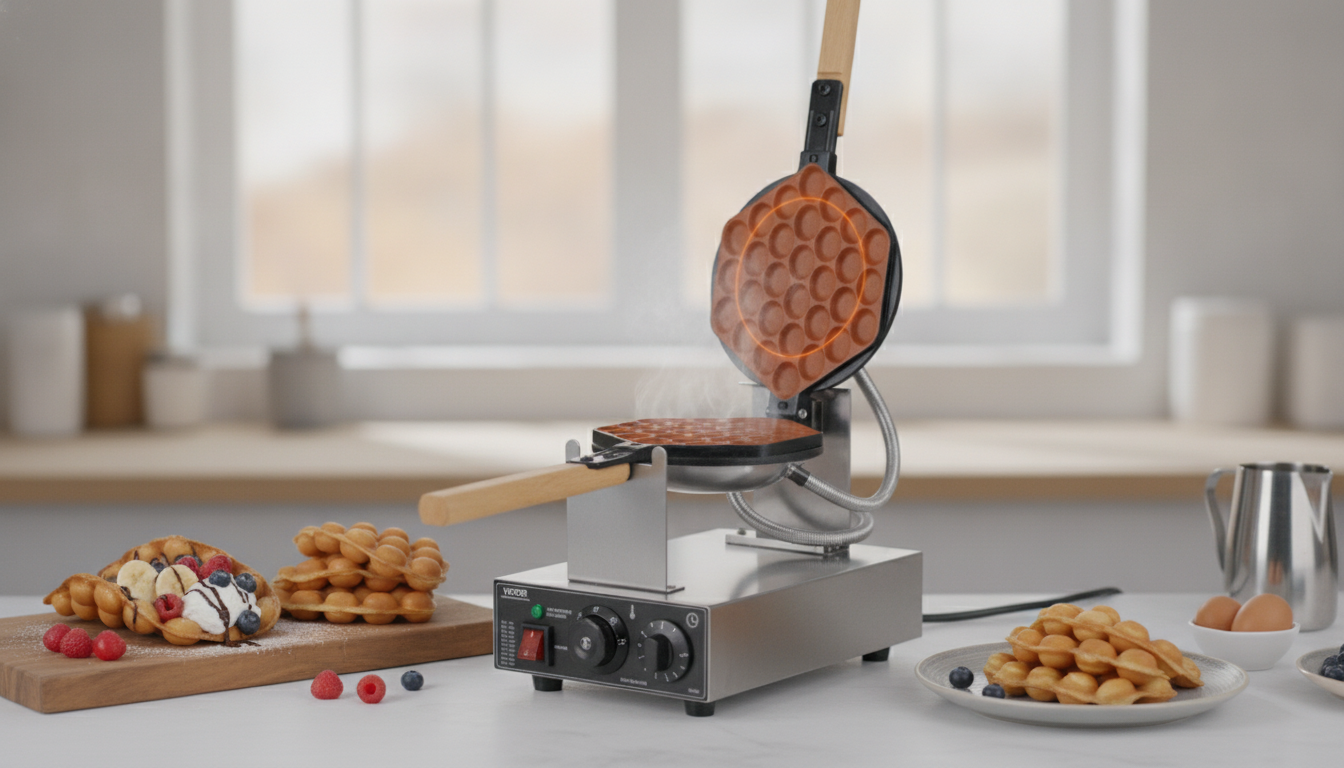
Bubble waffles stand out for their crisp exterior, airy centers, and pull-apart “egg” pockets that hold toppings without turning soggy. A commercial-style maker with a stainless steel body, non-stick plates, and dual rotating pans is designed for faster recovery between batches, more even browning, and smoother service for cafés, kiosks, pop-ups, and busy home kitchens. For more guidance, see The Texas Waffle Maker.
“Commercial” isn’t just a label—it’s a combination of heat power, durability, and repeatable controls that help keep output steady when you’re making waffle after waffle.
For operators, that adds up to fewer “off” batches, less downtime, and a cleaner workflow from prep to service.
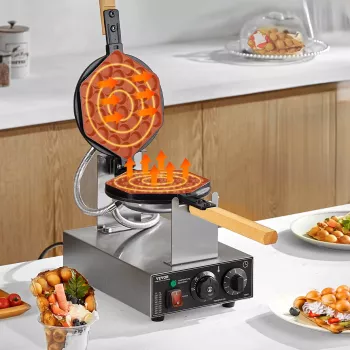
Rotation is a big reason bubble waffles come out evenly browned with well-defined pockets—especially when you’re moving quickly or using thicker batter.
In practical terms: you get fewer pale patches, fewer thin spots at the edges, and a more “photo-ready” waffle for cones, cups, and plated desserts.
For a bubble waffle station, materials matter because the machine sits in the splash zone—batter drips, sugar dust settles, and oils build up during service.
When evaluating food equipment for a customer-facing environment, it can also help to understand the basics of materials and safety expectations. For background, see the FDA overview of food contact substances and UL’s explanation of product certification.
A bubble waffle maker’s real test isn’t one perfect waffle—it’s the fifth and the fifteenth, when the plates have been opened repeatedly and batter is hitting hot metal on a tight rhythm.
For service planning, focus on what slows you down: under-preheating, inconsistent batter scoops, and opening too early. Correct those, and a commercial-format maker tends to feel dramatically more predictable during busy windows.
Before buying, match power and construction to your expected daily volume. If menu presentation depends on clean pocket definition and even color, rotating pans are worth prioritizing. Also plan for safe placement near an outlet, with enough clearance to open and rotate smoothly.
| Feature | What it affects in day-to-day use |
|---|---|
| 1400W heating power | Faster heat recovery and more stable cooking during back-to-back batches |
| Dual rotating pans | More uniform batter distribution and more even browning on both sides |
| Non-stick cooking plates | Easier release, fewer tears, and quicker turnaround between waffles |
| Stainless steel body | Durability, easier wipe-down, and better resistance to stains and corrosion |
| Commercial countertop format | Better stability for service setups and frequent opening/closing |
Yes—rotation helps batter and heat distribute more evenly, which reduces pale spots and helps bubbles set consistently. It’s especially helpful with thicker batters, add-ins, and back-to-back batch cooking.
Fully preheat the plates, use a light oiling only if needed, and keep batter consistency steady. Wait long enough before opening, use non-metal tools, and avoid abrasive cleaning that can damage the coating.
For frequent batches, 1400W is a practical reference point because it supports quicker heat recovery between pours. Higher wattage generally helps the plates hold a steadier temperature during consecutive cooking, improving consistency.





Leave a comment
You must be logged in to post a comment.