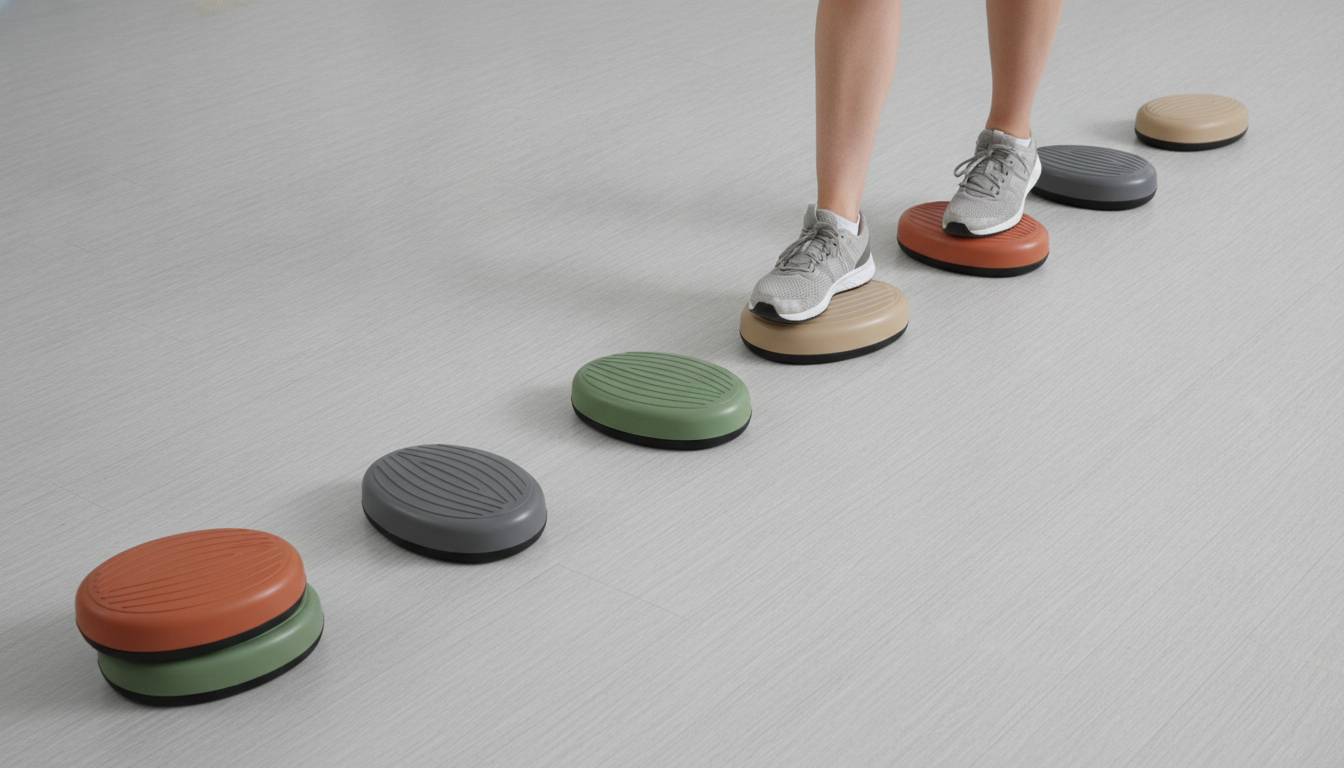
Yes—adults can use balance stepping stones, as long as the set is built for the weight and stability demands of adult use. While many stepping stones are marketed for kids, the basic training benefits (balance, coordination, ankle strength, and proprioception) apply to all ages. The key is choosing stones with a high weight capacity, strong anti-slip bases, and a surface texture that stays grippy in socks or bare feet.
Start with a simple, low-risk setup on a flat, clutter-free area. Place the stones close together and step slowly, focusing on controlled foot placement rather than speed. As comfort improves, increase the spacing, add turns, or practice pausing on one foot for a few seconds per stone. Many adults like using them as a quick warm-up before workouts, a mid-day movement break, or a light rehab-style balance drill (especially after long hours sitting).
For extra stability, position the course near a wall, countertop, or sturdy chair so a hand can hover nearby for support. If knees or ankles are sensitive, keep the pattern shorter and avoid high steps or jumping. A cushioned exercise mat under the stones can reduce impact, but it may also reduce stability—test carefully before committing to a harder progression.
Prioritize: (1) a clearly stated maximum weight rating, (2) wide bases with rubberized or non-skid feet, and (3) durable materials that won’t flex or crack. Textured tops help prevent slipping when feet get sweaty. If multiple people will use them, choose stones that stack neatly and wipe clean easily.
For a deeper dive into features, setups, and active-play ideas, visit this guide to balance stepping stones.
A flat, non-slippery surface like short carpet, rubber flooring, or a clean wood floor works well. Avoid uneven ground and slick tile unless the stones have strong non-slip bases and you can test stability first.


Leave a comment
You must be logged in to post a comment.