Everyday Table Protection That Still Looks Put-Together
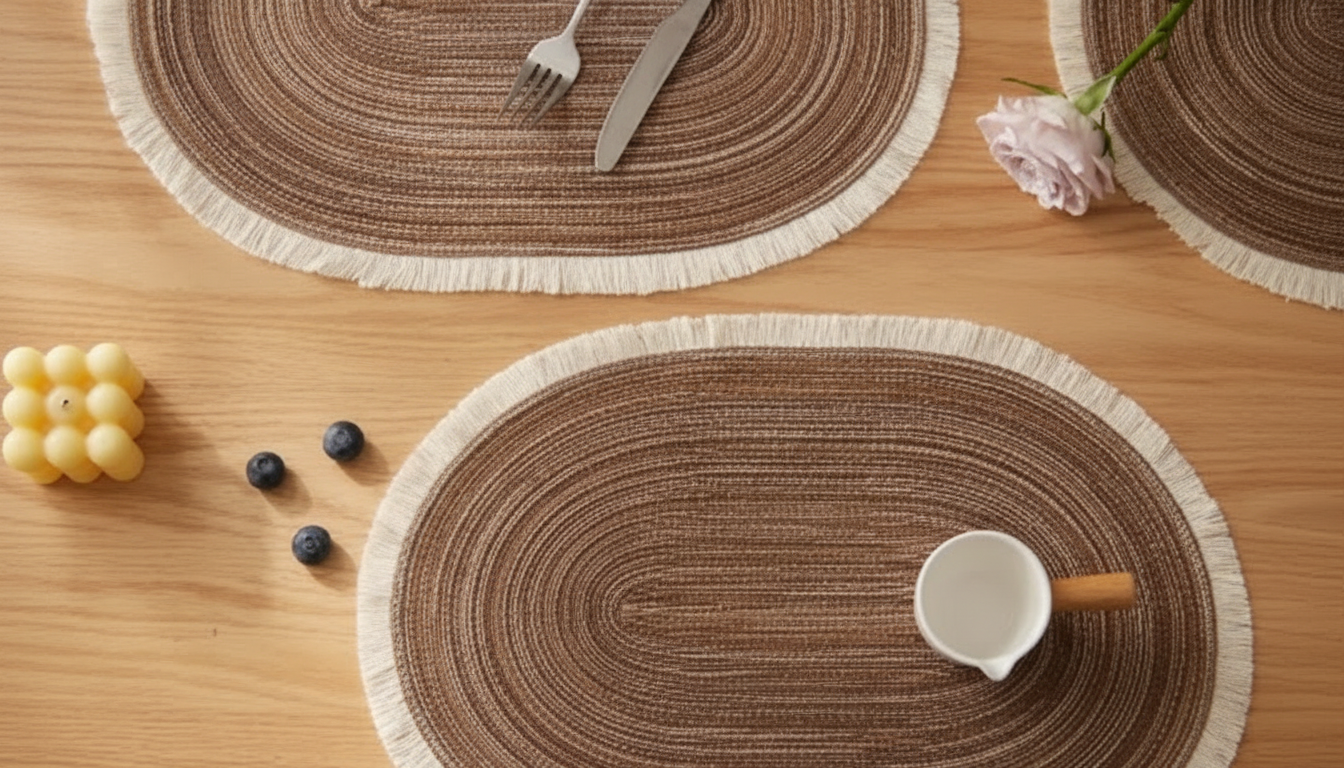
Oval, heat-resistant, non-slip placemats are a simple upgrade that can make everyday meals feel calmer and cleaner. Instead of worrying about scuffs from plates, moisture rings from drinks, or small sauce spills that turn into sticky cleanup, you get a protective layer that’s designed for regular use. This set of four oval mats is made to fit naturally into daily routines: wipe them down after dinner, wash them when needed, and set them back out without fuss. The oval shape frames plates neatly without crowding the rest of the place setting.
What These Oval Placemats Are Made to Do
- Create a stable, non-slip base so plates, bowls, and cutlery feel anchored during meals.
- Add a heat-buffering layer between hot serveware and your table surface.
- Catch crumbs, drips, and condensation to cut down on daily wipe-down time.
- Refresh your table’s look without committing to a full tablecloth.
Best Uses Around the Home
Placemats don’t have to live only at the dining table. Because they’re quick to put down and easy to clean, they’re useful anywhere you want a cleaner surface and fewer scratches.
- Daily dining: breakfast, lunch, and dinner place settings for adults and kids.
- Coffee and tea moments: help protect from mug rings and small spills.
- Serving zones: place under a shared bread basket, condiments, or a small serving dish.
- Desks and craft tables: a quick protective layer for snacks, glue, markers, or small projects.
Heat Resistance and Table Protection: Practical Guidelines
Heat resistance is most helpful in the everyday “warm-to-hot” range—think microwaved bowls, fresh pasta plates, or a serving dish that’s been sitting near the stove. Used thoughtfully, a placemat can reduce the risk of heat marks and cloudy spots on finishes.
- Use the placemat as a protective barrier for warm-to-hot plates and bowls, especially on wood, lacquered, glass, or stone surfaces.
- For very hot cookware (fresh off the stove or oven), place a trivet or dedicated hot pad on top for extra protection.
- Avoid prolonged heat exposure in one spot; briefly lifting and repositioning helps reduce heat buildup.
- Check the table manufacturer’s care notes—some finishes are more sensitive to heat and moisture than others.
Non-Slip Performance: What Affects Grip
“Non-slip” works best when the mat can make full contact with a clean, dry surface. Small things—like condensation under a cold drink or a thin film from polish—can change how well any mat grips.
- A clean, dry tabletop improves traction—wipe away dust, oil, and moisture before placing.
- Very smooth surfaces (high-gloss glass, polished stone) may reduce grip if there’s condensation underneath.
- If a placemat slides, clean both the mat and the tabletop to remove residue from cleaners, waxes, or oils.
- Keep the underside free of crumbs; small particles can create a “roller” effect.
Washability and Care for Long-Lasting Use
Easy care is what turns placemats into a true everyday item. A quick wipe after meals prevents residue buildup and helps the surface stay grippy and fresh.
- For daily maintenance, wipe with a damp cloth and mild soap to remove oils and food residue.
- For deeper cleaning, wash gently with warm water and mild detergent, then air-dry fully before storing.
- Avoid harsh abrasives that can dull the surface and reduce grip over time.
- Store flat when possible to preserve the oval shape and prevent curling at the edges.
For general food-area cleanliness habits (especially after messy meals), reliable guidance from the USDA FSIS and the American Cleaning Institute can help you build a simple routine that keeps surfaces looking (and feeling) better day to day.
Set Overview: Quick Specs and At-a-Glance Comparison
- Set size: four placemats for a standard table setting.
- Shape: oval, suited to framing round plates and softening the look of angular tables.
- Use case: everyday dining protection with easy cleanup.
Placemats at a Glance
| Feature |
What it Means at the Table |
Helpful Tip |
| Oval shape |
Fits common place settings while keeping edges tidy |
Center the mat so cutlery sits fully on the surface |
| Heat-resistant layer |
Helps reduce heat marks from warm plates and bowls |
Use a trivet for extremely hot cookware |
| Non-slip design |
Less sliding when cutting food or moving utensils |
Wipe the tabletop to remove wax or oil film |
| Washable / wipeable |
Simplifies cleanup after sauces, oils, and crumbs |
Air-dry completely before stacking or storing |
| Set of 4 |
Covers a small family table or a 4-seat setup |
Keep one spare for serving dishes or kids’ crafts |
Styling Ideas: Making Oval Placemats Look Intentional
- Layer with a simple runner to define the center of the table while keeping each seat protected.
- Pair with round plates or softly curved dinnerware to echo the oval outline.
- Use consistent napkin color to create a clean, coordinated look across all four settings.
- For mixed seating (adults + kids), keep placemats consistent and vary only cup color for a playful touch.
When to Replace Placemats
Shop Coordinated Home Updates
FAQ
Can these placemats be used under hot pots and pans?
They help protect against heat from warm-to-hot dishes, but extremely hot cookware is best placed on a dedicated trivet or hot pad for maximum protection.
How should washable placemats be cleaned for everyday use?
Wipe with a damp cloth and mild soap for routine cleanup; for deeper cleaning, wash with warm water and gentle detergent, then air-dry completely.
Why do non-slip placemats sometimes slide on glass tables?
Condensation, oily residue, or cleaning-product film can reduce grip on very smooth surfaces; cleaning both the tabletop and the underside of the mat usually restores traction.
Recommended for you

Leave a comment
You must be logged in to post a comment.