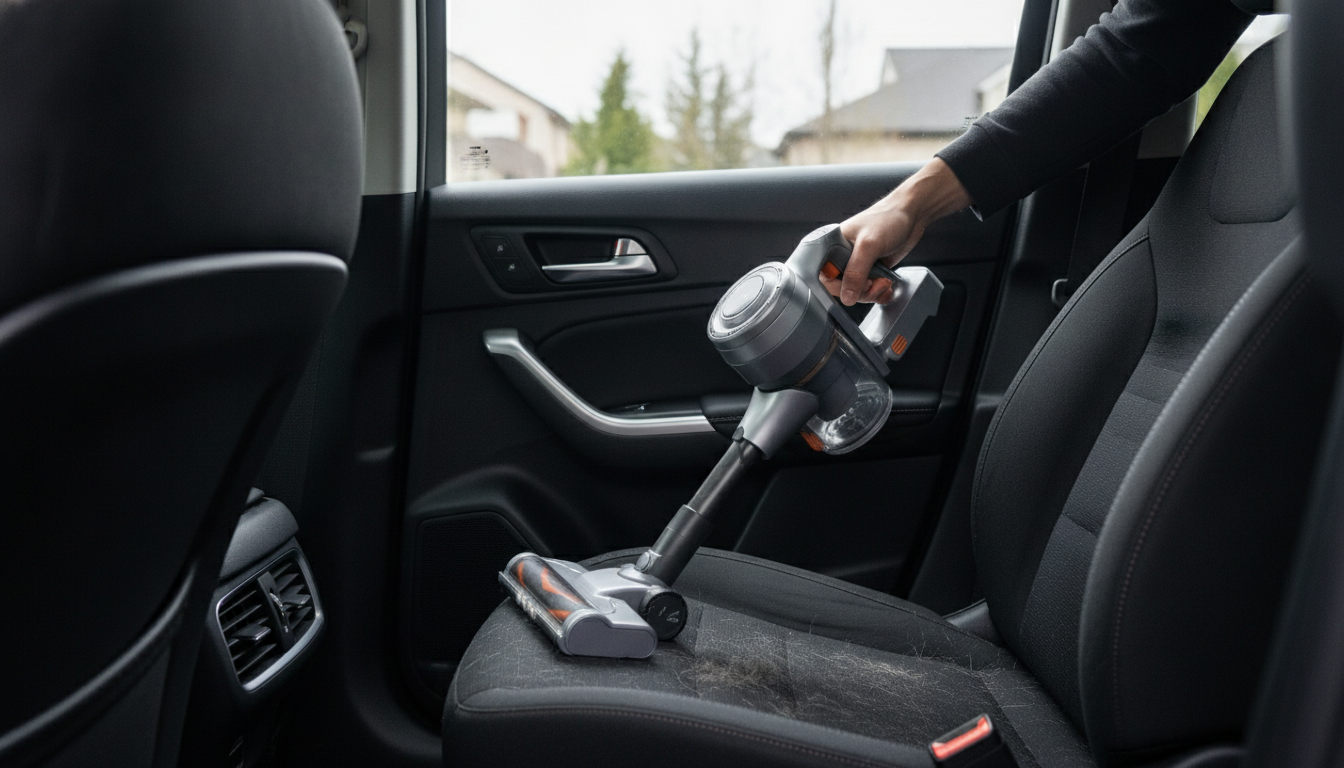
Yes—handheld vacuums can work very well on pet hair, especially for quick cleanups on couches, car seats, stairs, and spot messes around pet areas. The key is matching the vacuum’s suction and attachments to the surface you’re cleaning. Pet hair likes to cling to upholstery and woven fabrics, so a handheld that includes a motorized brush (or a powered pet tool) typically removes more hair in fewer passes than a bare nozzle.
Several features matter more than the brand name. Strong, consistent suction helps pull embedded fur out of fabric. A motorized brush agitates fibers so hair lifts instead of smearing across the surface. A well-designed filter system (ideally with fine filtration) helps keep dander and dust from blowing back into the air. Finally, enough runtime and a dustbin that’s easy to empty make the vacuum practical for frequent pet-related cleanups.
Handheld models are great for targeted areas: pet beds, furniture cushions, carpeted stairs, baseboards, and vehicles. They’re also convenient for grabbing tufts of fur around feeding stations or litter areas. Where they struggle is whole-home cleaning—large rooms, thick carpet, or days of heavy shedding may be faster with a full-size stick or upright vacuum. A handheld is best as a companion tool for everyday maintenance.
Use the right attachment first: start with a motorized brush on upholstery and a crevice tool along seams where hair collects. Work in short, overlapping strokes and change direction to lift hair caught in the weave. Empty the bin before it’s packed full, and check the brush roll for wrapped hair to keep performance from dropping mid-clean.
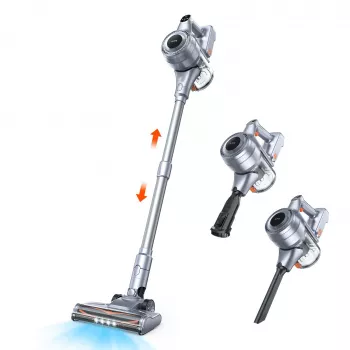
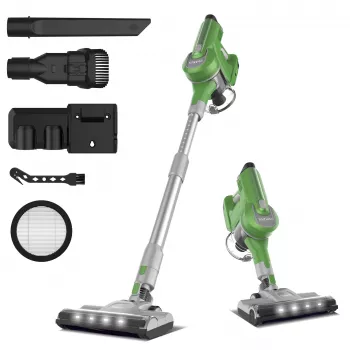
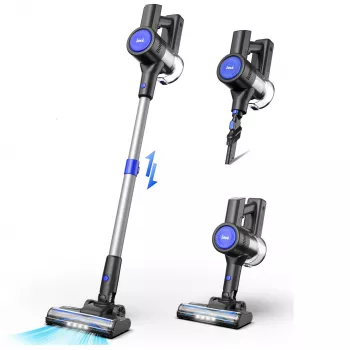
For a deeper look at what to compare—runtime, suction, LED lighting, and everyday usability—see this cordless handheld vacuum guide.
They can, especially for small staircases and spot cleaning. A handheld with a motorized brush tool will pull more hair and grit from carpeted steps than suction alone.

Leave a comment