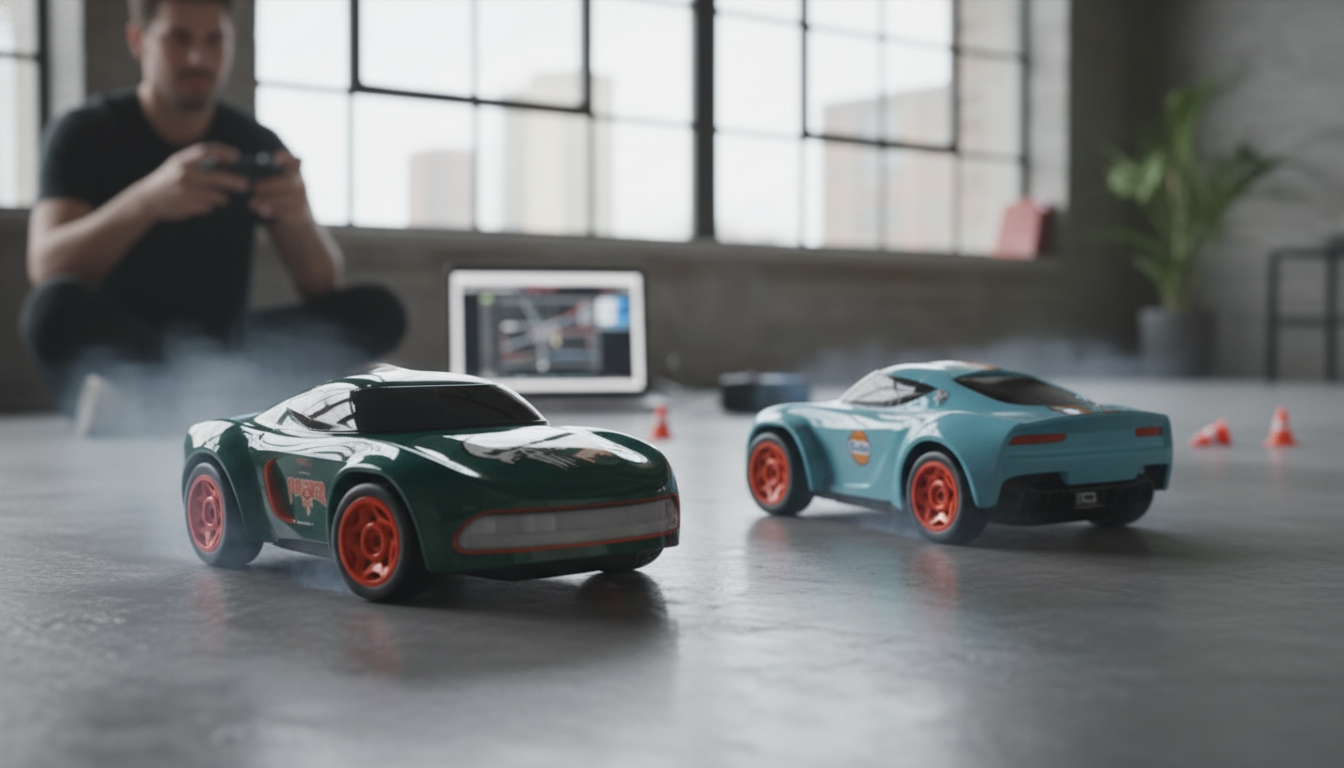
A 1:64 drift car turns small spaces into a practice track, letting beginners learn controlled slides without needing a large course. The fun comes from repeatable handling—clean initiations, smooth transitions, and the satisfaction of holding angle corner after corner. Below is a practical guide to what matters in a mini drifter, how to set up a simple indoor course, and how to improve with easy drills and basic care.
Mini RC drift cars are built for controllable oversteer rather than maximum straight-line speed. At this scale, the goal is to make the rear end step out on command, then keep it there with steady throttle and quick steering corrections.
If you’re new to RC in general, a quick overview of how RC cars work is available here: Radio-controlled car (overview).
Two mini drift cars can look similar but feel completely different once they’re sliding. Focus on controllability first, because that’s what keeps practice sessions fun instead of frustrating.
For a compact option designed for tight spaces, check out the 1:64 Mini RC Drift Racing Car, a budget-friendly pick that’s easy to break out for quick indoor laps.
You don’t need cones, timing gates, or a dedicated room. A few household items can create a layout that teaches the fundamentals: initiation, angle control, and transitions.
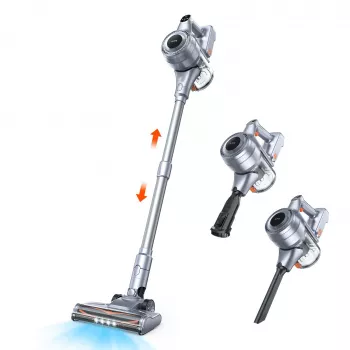
Dust and hair are common grip-killers indoors. If you want an easy way to keep the practice area clean between sessions, a small vacuum can help—especially around baseboards and corners. The Powerful Cordless Handheld Vacuum Cleaner with LED Light & 40-Min Runtime is handy for quick touch-ups before you run a battery pack.
Drifting improves fastest when you repeat the same inputs and adjust one thing at a time. These drills build the core skills that transfer to any layout.
For general lithium battery travel and safety guidance, the FAA provides a helpful overview here: FAA guidance on lithium batteries (pack safe).
| Item | Why it helps | Beginner tip |
|---|---|---|
| Smooth surface (tile/wood) | Consistent traction for repeatable slides | Test a small area first to find the most predictable grip |
| Painter’s tape or foam bumpers | Defines corners and protects furniture | Make corners wide at first, then tighten the layout over time |
| Microfiber cloth | Removes dust that changes grip | Wipe tires and the track area before each session |
| Clear run-off space | Reduces crashes and interruptions | Keep a “no-breakables” buffer around the course |
If the goal is easy practice in tight spaces, the 1:64 Mini RC Drift Racing Car is a solid starting point: affordable, small enough for indoor use, and ideal for building fundamentals with circle drifts and figure-eights. Pair it with a taped course, clean tires, and short sessions a few times a week to develop smooth, repeatable control.
Smooth, consistent surfaces like tile or hardwood are usually best because they let the tires break traction the same way each run. If the floor is dusty, grip will change lap to lap, so test a few spots and wipe both the tires and the surface before you drive.
Most spin-outs come from entering too fast, using too much throttle too suddenly, or making big steering overcorrections. Slow down your entry, apply throttle more smoothly, use smaller steering corrections, and practice steady circle drifts to build consistency.
Charge on a non-flammable surface, avoid charging when the car is hot, and monitor the first few charging sessions. Let the car cool after running, don’t store it fully depleted for long periods, and keep both the car and remote away from moisture.





Leave a comment
You must be logged in to post a comment.