
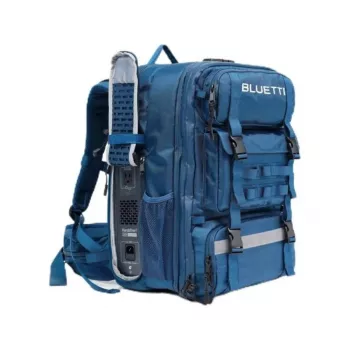
A handsfree solar backpack power station combines the everyday comfort of a backpack with a compact power station and solar charging capability. Instead of keeping your energy reserve parked on a picnic table, you can carry it through airport terminals, between classes, across festival grounds, or along a trail—while still topping up the devices you actually use all day. With a 268.8Wh LiFePO4 battery, this style of setup is built for reliable charging of phones, tablets, cameras, lights, and other low-to-mid watt gear, with solar acting as a practical “range extender” during long days outside.
The biggest advantage of a wearable power station is simple: power travels with you. That makes it a strong fit for situations where you’re moving frequently and don’t want to babysit a battery box at a single spot.
Watt-hours (Wh) tell you how much energy is stored. In real life, not all of that energy makes it into your device—conversion and heat losses are normal. For planning, it’s smart to assume about 75–90% usable energy, depending on the output you use and how demanding the load is.
USB charging tends to be more efficient than running an AC inverter for small devices. That’s why a compact backpack station can feel surprisingly capable for phones and lights, but less impressive for AC-powered gear. High-draw appliances like kettles, space heaters, or hair dryers generally don’t belong in a backpack-sized power plan.
| Device | Typical power draw / battery size | Estimated result from 268.8Wh |
|---|---|---|
| Smartphone | 10–15Wh battery | About 12–20 full charges (allowing for losses) |
| Tablet | 25–40Wh battery | About 5–9 full charges |
| Laptop (USB-C/AC) | 50–70Wh battery | About 3–4 charges (varies by charging method) |
| LED lantern | 5–10W | About 20–45 hours |
| Small travel fan | 10–20W | About 10–20 hours |
One more planning tip: “startup surge” matters for motors and compressors (some fans, mini pumps, and anything with a compressor). Even if the steady wattage looks low, the initial spike can trip protection circuits on smaller stations.
LiFePO4 (lithium iron phosphate) batteries are popular in modern portable power because they’re designed for longevity and steadier performance over time. Compared with many conventional lithium-ion packs, LiFePO4 is widely valued for:
For a quick, high-level background on how batteries store and deliver energy, the U.S. Department of Energy provides a helpful overview: Battery basics (U.S. Department of Energy).
If you want a straightforward primer on how photovoltaics work (and why angle and sunlight intensity matter), see: Solar photovoltaics basics (NREL).
If you want a ready-to-go option built around this capacity and chemistry, see the product page: Handsfree Solar Backpack Power Station, 268.8Wh LiFePO4 Solar Generator for Travel.
It depends on the device battery size and conversion losses, but a 268.8Wh station typically delivers about 12–20 full smartphone charges and roughly 3–4 laptop charges. USB-C charging is often more efficient than using AC, which can improve real-world results.
Usually not quickly. Solar input changes constantly with sun strength, panel angle, shade, and clouds, so it’s best treated as a range extender that helps maintain or slowly replenish power while you’re out.
LiFePO4 is widely chosen for its stability and long cycle life, making it a strong option for frequent charging routines. Basic precautions still matter: manage heat, use properly rated chargers and cables, and confirm airline watt-hour rules before flying.




Leave a comment
You must be logged in to post a comment.