6.4Qt 2-Tier Electric Food Steamer: Timer + Keep Warm
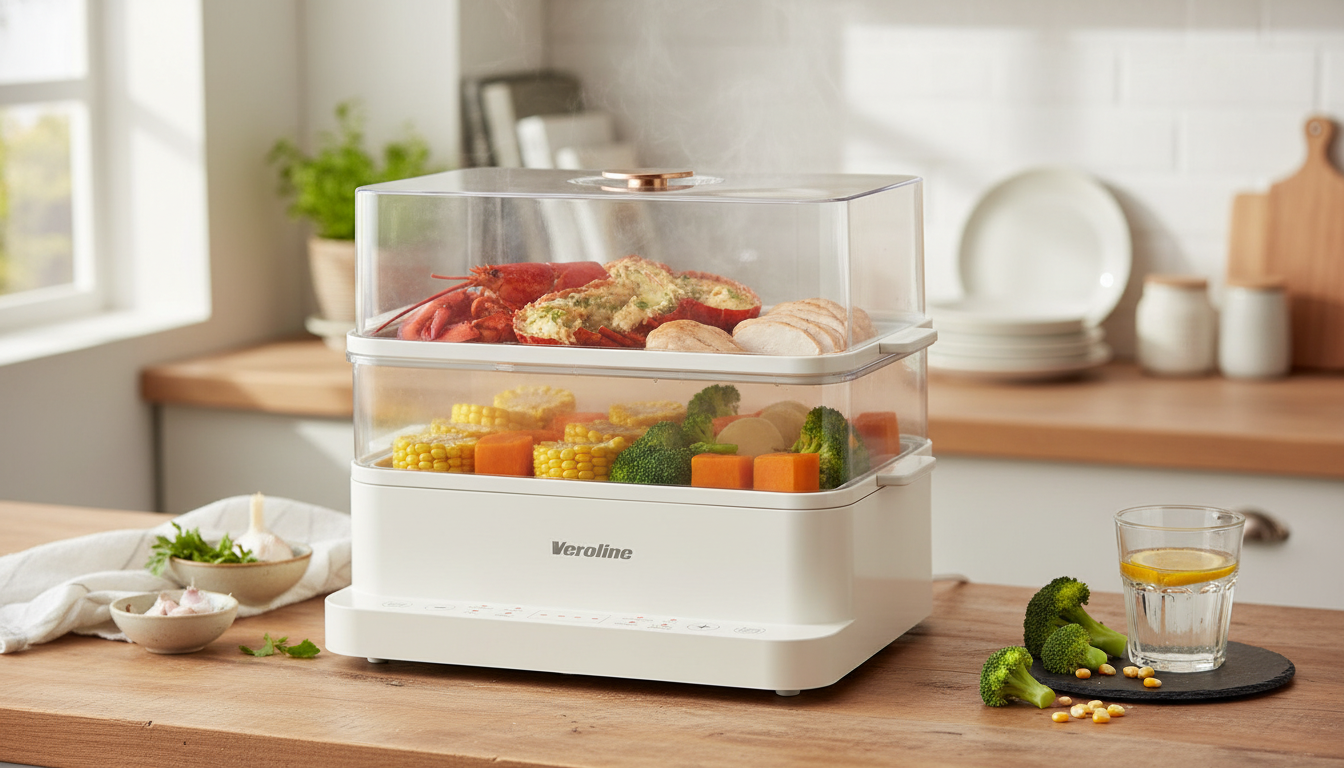
Electric Food Steamer 6.4Qt: 2-Tier Steaming with Timer and Keep Warm
A countertop steamer can simplify weeknight cooking by handling vegetables, proteins, and grains with less monitoring than stovetop methods. This 6.4Qt, 2-tier electric steamer focuses on convenient batch cooking with a built-in timer and a keep-warm function so food can be ready when the rest of the meal is.
What This Steamer Is Designed to Do
An electric steamer is at its best when it helps you cook multiple parts of a meal with fewer moving pieces. With two stackable tiers and a family-friendly capacity, this style of unit is built for practical, repeatable results rather than constant checking.
- Steam multiple foods at once using two tiers to help pace side dishes and mains together.
- Support everyday portions with a 6.4Qt total capacity suited for families, meal prep, or cooking several components in one run.
- Reduce guesswork with a timer for more consistent results across common foods like broccoli, carrots, dumplings, fish, chicken pieces, and eggs.
- Hold food at serving temperature after steaming with keep-warm, helpful when meals are staggered.
- Encourage lighter cooking by using steam rather than added oil for many dishes.
Key Features That Matter Day to Day
The most useful features on a countertop steamer are the ones you feel on a busy evening: enough room to make it worthwhile, a simple control scheme, and a way to prevent dinner from going cold while you finish the rest of the plate.
- 6.4Qt capacity: enables larger batches and fewer cooking rounds for meal prep.
- 2-tier stack: cooks two dishes simultaneously; use one tier for smaller loads or when flavors should not mix.
- Timer control: set-and-check cooking rather than constant stovetop watching.
- Keep-warm mode: maintains temperature for short periods to align with plating and serving.
- Compact countertop footprint: aims to save space compared with large stockpots and inserts.
| Feature | Why it helps | Best for |
|---|---|---|
| 6.4Qt capacity | Fewer batches and more flexibility | Families, meal prep, hosting |
| 2-tier design | Cook multiple items at once | Vegetables + protein, dumplings + greens |
| Timer | More repeatable doneness | Busy schedules, beginners |
| Keep warm | Prevents food from going cold quickly | Staggered mealtimes |
| Electric steaming | No burner needed | Dorms, offices, small kitchens (where permitted) |
How to Use It for Better Results
Steam cooking is simple, but small adjustments make a noticeable difference in texture. When you treat the baskets like a “steam circulation zone” (rather than a bowl to pack), you get more even doneness from edge to edge.
- Fill the reservoir to the recommended level before starting; insufficient water can shorten steaming time and affect doneness.
- Preheat briefly if the model allows; otherwise add a few minutes to the first batch to account for warm-up.
- Load smarter: place longer-cooking foods (carrots, potatoes) on the lower tier and quicker foods (broccoli, asparagus) on the upper tier.
- Avoid overcrowding; steam must circulate. Spread pieces in a single layer when possible.
- Season after steaming for brighter flavor, or add aromatics (ginger, citrus peel, herbs) in a safe, appropriate way if the unit supports it.
- Use keep-warm as a short holding step; for best texture, serve delicate vegetables soon after cooking.
For proteins, don’t rely on time alone. Thickness, starting temperature (straight from the fridge vs. closer to room temp), and how tightly pieces are arranged can all shift outcomes. When in doubt, verify doneness with a thermometer and follow recognized safety guidance from the USDA Food Safety and Inspection Service safe temperature chart.
Suggested Cooking Times (Adjust for Size and Preference)
| Food | Typical time range | Notes |
|---|---|---|
| Broccoli florets | 5–8 min | Crisp-tender at the low end; softer at the high end |
| Green beans | 6–10 min | Trim ends; thicker beans need longer |
| Carrots (slices) | 8–12 min | Match slice thickness for even texture |
| Potatoes (chunks) | 15–25 min | Smaller cubes cook faster |
| Fish fillet | 8–12 min | Thicker cuts take longer; check for flaking |
| Chicken pieces | 15–25 min | Cook to safe temperature; thicker pieces may need longer |
| Dumplings | 10–15 min | Avoid stacking; ensure steam reaches all sides |
| Eggs (whole) | 10–14 min | Timing varies by desired yolk firmness and egg size |
If you’re holding food after cooking, keep-warm is most useful as a short buffer, not a long parking spot. For broader time-and-temperature handling guidance, the FDA Food Code is a helpful reference point for safe practices.
Cleaning and Care
Who This 6.4Qt 2-Tier Steamer Fits Best
Product Options
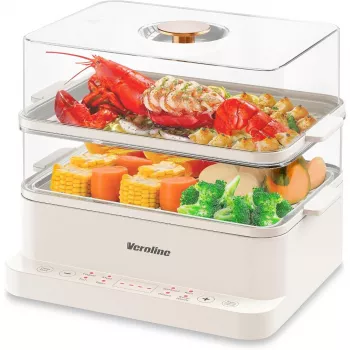
- Electric Food Steamer 6.4Qt, 2-Tier Vegetable Steamer with Timer & Keep Warm — a practical pick for multi-item steaming with a simple timer and holding function.
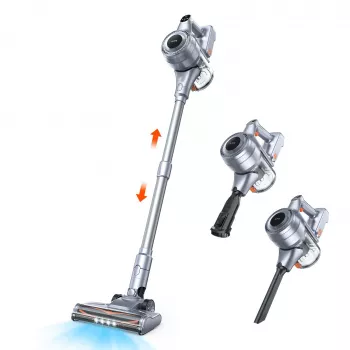
- Powerful Cordless Handheld Vacuum Cleaner with LED Light & 40-Min Runtime — useful for quick cleanup after meal prep (dry spills, crumbs, and pantry messes).
- S925 Iced Out Moissanite Bangle Bracelet for Men and Women — a giftable add-on if you’re bundling a kitchen upgrade with something personal.
FAQ
Can vegetables and fish be steamed at the same time in a two-tier steamer?
Yes, but place stronger-smelling foods on the lower tier and quicker-cooking foods on the upper tier. If you’re sensitive to flavor transfer, steam delicate fish separately or run it after vegetables.
How long does keep-warm hold food without ruining texture?
Keep-warm is best for short holds while you finish the rest of the meal. Sturdier items tend to hold up better, while tender vegetables can soften the longer they sit.
How often should an electric steamer be descaled?
It depends on your water hardness and how often you use the steamer. A common routine is monthly in hard-water areas or anytime you notice visible mineral buildup.














Leave a comment