9-Drawer Fabric Dresser: Tall Chest Organizer for Bedroom & Closet Storage
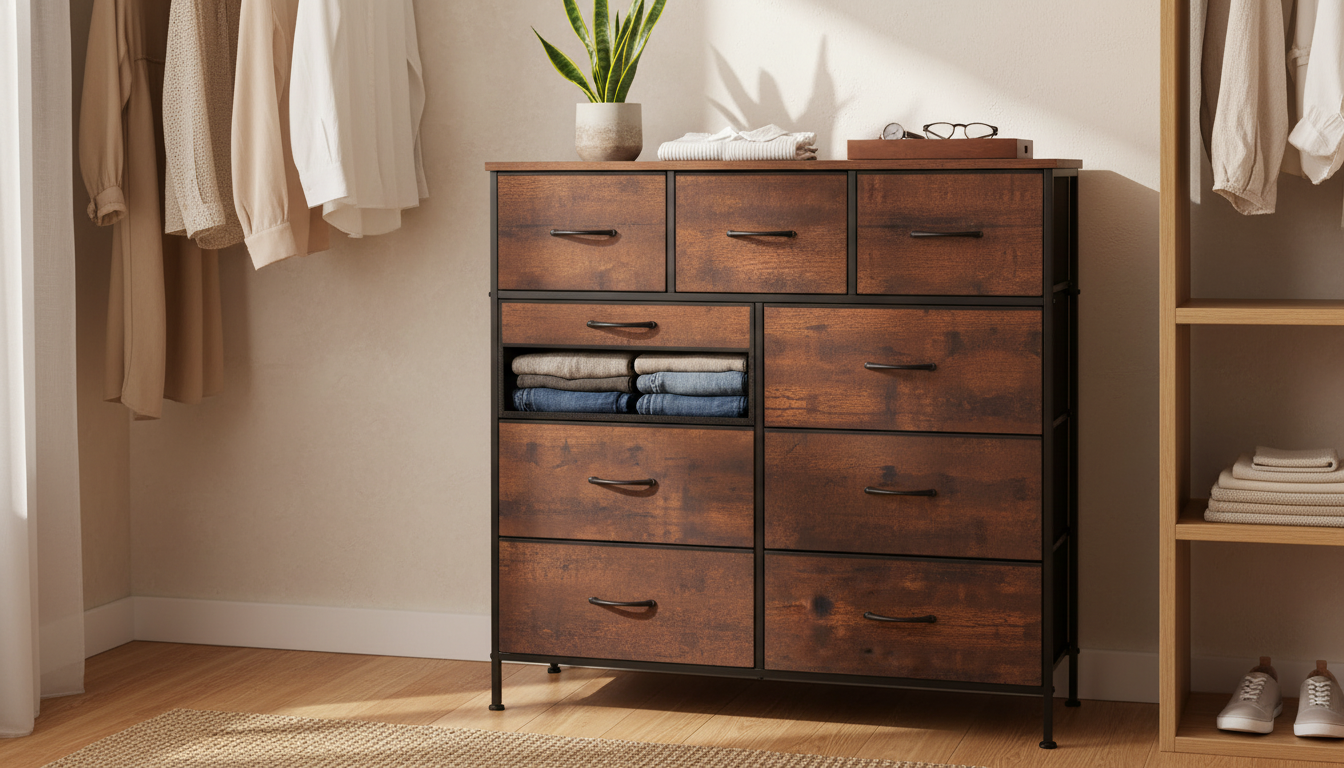
A tall fabric dresser is a practical way to add drawer space without the bulk of a traditional wood chest. This 9-drawer tower is designed for everyday sorting—clothes, accessories, linens, and odds-and-ends—while keeping a smaller footprint that works well in bedrooms, closets, and apartments. If you’re trying to reduce “float” (those items that end up on chairs, closet shelves, or the laundry basket), a vertical drawer organizer helps turn scattered piles into a simple, repeatable routine.
What This 9-Drawer Fabric Dresser Is Best For
- Bedroom overflow storage: tees, sleepwear, socks, and seasonal items that don’t fit in the main dresser
- Closet organization: creates drawer storage where a closet system has only shelves or hanging space
- Entryway or hallway staging: gloves, hats, pet accessories, reusable bags, and daily grab-and-go items
- Kids’ rooms: light drawers that are easy to open and sort by category
- Small-space living: vertical storage that helps reduce floor clutter while keeping items accessible
Layout and Storage Strategy: Getting the Most from 9 Drawers
Nine drawers is a sweet spot for category-based organizing: enough separation to keep items easy to find, without creating “mystery drawers” that never get maintained. A reliable approach is to think in zones—daily, weekly, and occasional.
- Assign zones by frequency: top drawers for daily essentials; middle drawers for weekly use; bottom drawers for bulky or seasonal items
- Use drawer categories that stay consistent: (1) underwear, (2) socks, (3) workout gear, (4) tees, (5) pajamas, (6) accessories, (7) towels, (8) linens, (9) spare cords/batteries
- Keep lightweight items up top: improves the feel of opening/closing and supports stability
- Add soft dividers or small bins: helpful for accessories, ties, chargers, and hair tools
- Labeling helps: especially for kids, roommates, or shared closets where multiple people use the same storage
Example 9-Drawer Setup by Room
| Room |
Top Drawers |
Middle Drawers |
Bottom Drawers |
| Bedroom |
Socks, underwear, daily accessories |
Tees, lounge, workout |
Sweaters, jeans, seasonal items |
| Closet |
Belts, scarves, small accessories |
Folded tops, activewear |
Extra linens, handbags, storage pouches |
| Kids’ Room |
School-day basics, socks |
Shirts, shorts, pajamas |
Blankets, costumes, seasonal clothes |
Materials and Build: What to Expect from a Fabric Drawer Tower
A fabric drawer dresser is designed to be lighter and easier to reposition than a solid wood chest. That’s a major advantage in apartments, dorms, and closets—especially when you want to fine-tune the layout or clean behind it without turning the task into a project.
- Fabric drawers keep weight down: and can reduce the chance of denting walls or nearby furniture when moving the unit
- Frame-style organizers balance sturdiness and portability: they’re typically straightforward to assemble and easy to relocate
- Best for soft goods and small accessories: clothing, linens, and lightweight household items rather than heavy tools
- Avoid overstuffing: distribute weight evenly so drawers keep their shape and slide smoothly
- Closet fit check: ensure there’s enough clearance to pull drawers fully and to open nearby doors
Where It Fits: Placement Ideas for Bedroom, Closet, and Beyond
Assembly, Safety, and Everyday Care
- Assemble on a flat surface: tighten connections evenly so the frame sits square and drawers glide smoothly
- Load for stability: heavier items in lower drawers; keep the top surface clear of heavy loads to reduce tip risk
- Kid/pet households: consider wall anchoring when possible and keep climbing temptations (like toys or remotes) off the top; see the CPSC tip-over prevention guidance
- Cleaning: wipe the frame with a soft cloth; spot-clean fabric drawers and allow them to dry fully before reloading (general fabric-care guidance is available from the American Cleaning Institute)
- Protect flooring: add felt pads or a protective mat for hardwood or delicate surfaces
At-a-Glance Details and Buying Checklist
Quick Checklist Before Placement
| Check |
Why It Matters |
Tip |
| Footprint and height |
Ensures the unit fits without blocking doors or walkways |
Measure width/depth/height and nearby door swing |
| Drawer pull-out clearance |
Prevents drawers from hitting closet doors or furniture |
Leave extra space in front for full access |
| Weight distribution plan |
Improves stability and drawer performance |
Heavier items low, daily items up top |
| Room humidity and dust |
Helps keep stored items fresh |
Use sachets/liners and clean periodically |
In-Stock Picks to Complete the Setup
FAQ
Can a fabric dresser replace a traditional bedroom dresser?
It can work very well for folded clothes, accessories, and other lightweight items, especially when you need vertical storage in a tight space. A traditional dresser may still be better for very heavy contents or when you want a solid wood top for lamps, décor, or daily use.
How should the 9 drawers be organized for the easiest routine?
Use a top/middle/bottom zoning system: daily essentials up top, weekly-wear categories in the middle, and bulk or seasonal items on the bottom. Keeping categories consistent (and adding simple labels) helps the system stay easy to follow over time.
Is a tall drawer organizer safe in a home with kids or pets?
It’s safer when heavier items are stored in the lower drawers, the top is kept clear of heavy loads, and the unit sits on a level surface. When possible, add a wall anchor and keep climb-attracting items away from the top area.
Recommended for you



Leave a comment