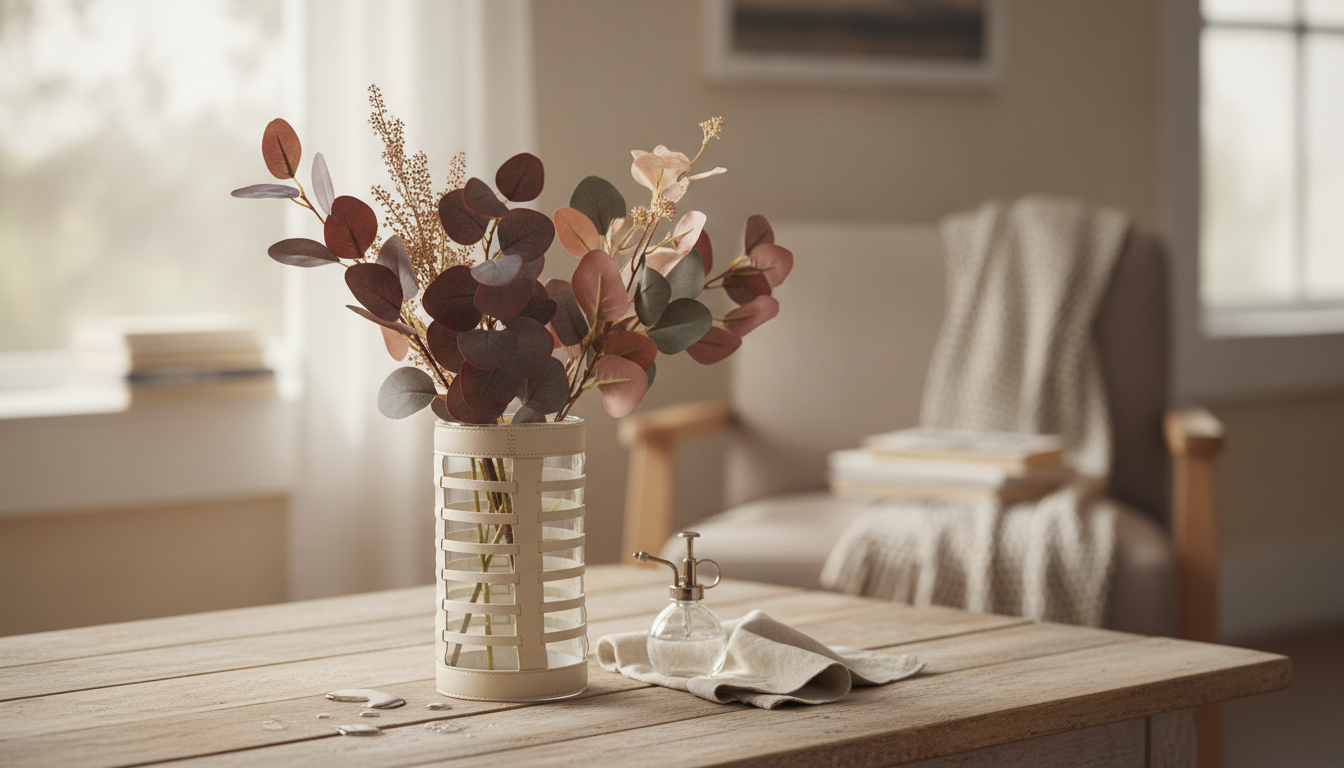
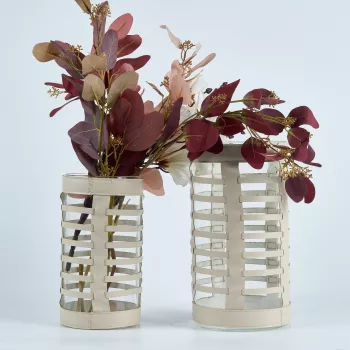
A transparent cylinder wrapped with leather stripes brings structure and warmth to plant styling. This geometric glass vessel works as a terrarium flowerpot, a minimal vase, or a tabletop display piece—letting stems, stones, moss, and water become part of the decor.
Some vessels hide the mechanics of arranging; this one celebrates them. The clear cylinder turns practical elements—like the water line or a drainage layer—into intentional, modern design.
If you’re building a small styling moment, start with the Glass Cylinder Vase with Leather Stripes and let the contents do the talking—clean lines, visible layers, and a calm, balanced silhouette.
This vase shifts easily from “plant lab” to “gallery-like centerpiece” depending on what you place inside and where you set it. Keep scale in mind: a taller stem reads architectural, while a low arrangement reads sculptural.
For a coordinated wall-and-table moment, pair the vessel with subtle botanical accents like Golden Flowers Decorative Vinyl Wall Stickers, keeping the rest of the palette restrained so the glass-and-leather contrast stays front and center.
Because this is an open vessel, choose plants that match real-world airflow and moisture levels. Open terrariums look crisp and modern, but they don’t hold humidity the way sealed containers do.
For plant-care fundamentals that translate well to open setups, reference guidance from the Royal Horticultural Society (RHS) houseplant care resources. For drought-tolerant choices, practical watering principles like those shared by the Missouri Botanical Garden can help keep succulents healthier and less prone to rot.
Start with a clean, dry vase so each layer stays sharp. Add stones for drainage, then a thin activated charcoal layer, then sand/soil as needed; finish with a few drought-tolerant plants and a top dressing of rocks to keep it crisp and graphic.
Fill with clean water and place stems so at least one node sits below the waterline. Keep the cluster airy rather than packed, and refresh the water regularly to maintain clarity and reduce odor.
Add water, trim stems at an angle, and remove any leaves that would sit below the waterline. Aim for negative space—one focal bloom or a small group of sculptural stems—so the leather stripes and cylinder geometry stay visible.
Choose the setup based on where it will live and how much attention you want to give it day to day. Small habits—like keeping the leather dry and protecting the surface underneath—go a long way toward keeping the piece looking elevated.
| Use | What to Add | Light & Placement | Upkeep |
|---|---|---|---|
| Open terrarium (dry) | Stones + charcoal + sand/soil + succulents/cacti | Bright light; avoid soggy conditions | Water sparingly; keep layers crisp |
| Propagation vessel | Clean water + cuttings (pothos/philodendron) | Indirect light; stable temperature | Change water; rinse glass when cloudy |
| Cut-flower vase | Fresh water + trimmed stems | Cooler area away from heat vents | Refresh water; remove wilted stems |
| Decor-only display | Sand/pebbles + dried stems or branches | Anywhere; prioritize balance and scale | Dust occasionally; keep leather dry |
Yes—used as an open terrarium, it’s a strong fit for succulents in a dry setup. Add a drainage layer (stones), keep watering minimal, and place it in bright light to avoid excess moisture around roots.
Soak the vase briefly in a diluted vinegar-and-water solution, then use a soft bottle brush to lift deposits. Rinse thoroughly and dry completely to restore clarity and prevent new spotting.
Keep the leather as dry as possible and wipe it with a soft, dry cloth if it gets splashed. Avoid soaking, harsh cleaners, or prolonged humidity, and dry the surface promptly to protect the finish.

Leave a comment
You must be logged in to post a comment.