Heavy-Duty Electric Hoist Support Arm: Mounting & Safety
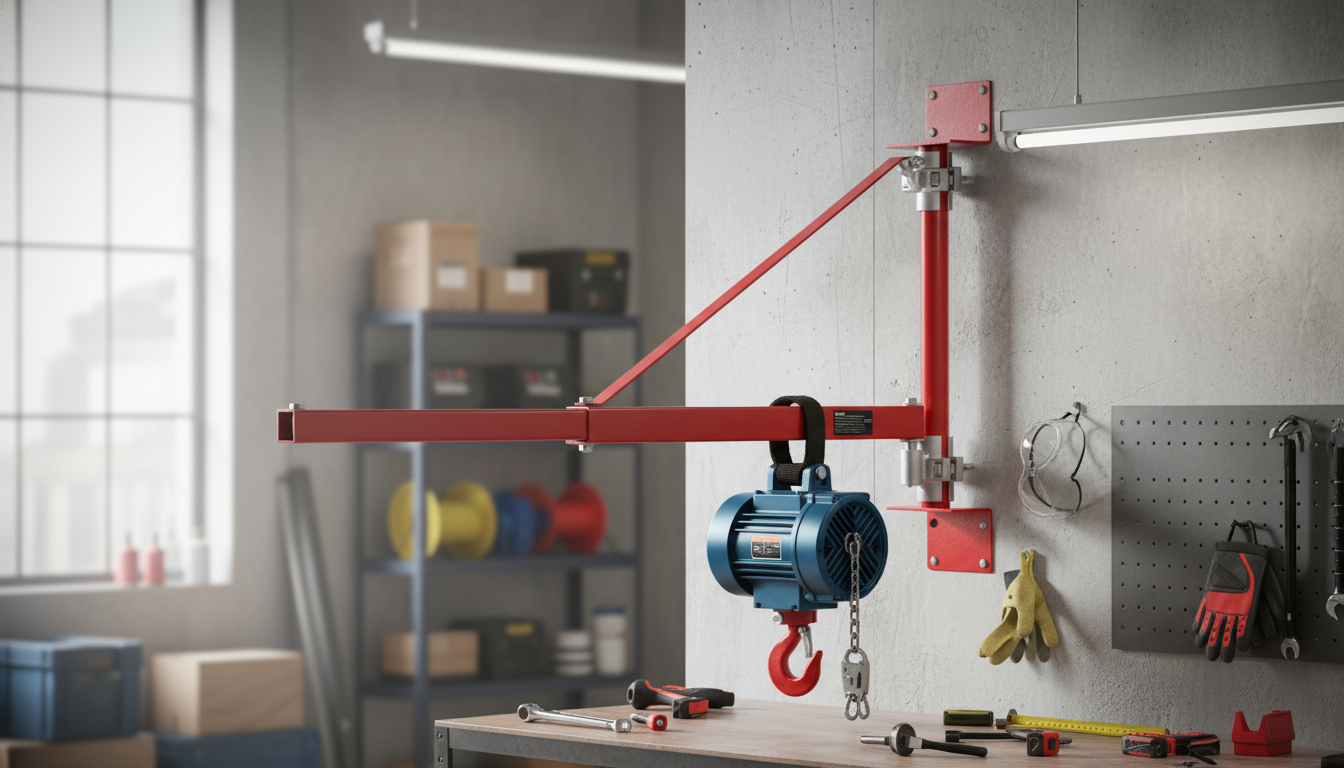
Heavy-Duty Electric Hoist Support Arm
A support arm for an electric hoist creates a stable mounting point that helps keep lifting operations controlled, repeatable, and safer in garages, workshops, and light industrial spaces. Instead of improvising with ceiling joists or temporary rigging, a purpose-built arm gives your hoist a dedicated, elevated attachment point designed to handle lifting forces with less sway and fewer surprises. The best results come from matching the arm to the hoist’s load rating, the strength of the mounting surface, and the reach you actually need—while maintaining rigidity under load and minimizing swing.
What a Hoist Support Arm Does
A hoist support arm functions like a fixed lifting station. Once installed correctly, it gives you a repeatable place to pick, raise, and position loads without constantly reconfiguring straps, ladders, or makeshift overhead points.
- Creates a fixed, elevated attachment point for an electric hoist to lift and position loads with less manual handling
- Improves control by keeping the hoist aligned and reducing side loading compared with improvised mounting points
- Helps organize a work area by dedicating one lifting station for engines, equipment, or materials
- Can expand usable lifting coverage when paired with appropriate mounting height and clearance
Where It Fits Best: Common Use Cases
A fixed arm setup is especially useful when you do similar lifts repeatedly and want a consistent hook position, predictable headroom, and a clear operating zone.
- Garage and automotive: lifting engines, transmissions, and shop fixtures
- Workshop and fabrication: moving stock, positioning assemblies, supporting repetitive lifts
- Warehouse and maintenance areas: handling parts, motors, pumps, and crates at a fixed station
- Home projects: controlled lifting where ceiling mounting is not feasible or desired
Key Compatibility Checks Before Buying
Before choosing a support arm, confirm that every component in the load path is rated appropriately—from the arm itself to anchors, fasteners, and the structure behind the mount. Lifting hardware is only as strong as its weakest link.
- Load rating: the support arm and all fasteners/anchors must meet or exceed the hoist’s maximum rated capacity
- Mounting type: confirm whether the arm is intended for wall, column, or bench mounting, and verify the structure can handle dynamic lifting loads
- Reach and clearance: ensure the arm’s projection and the hoist’s headroom allow the hook to reach the working area without interference
- Hoist interface: check how the hoist attaches (bracket pattern, clamp, eyelet) and whether a trolley is required/compatible
- Duty cycle and frequency: repeated lifts can fatigue undersized mounting surfaces or fasteners even if single-lift capacity seems adequate
Compatibility checklist
| Check | What to verify | Why it matters |
|---|---|---|
| Rated capacity | Arm rating, mounting hardware rating, anchor rating | Prevents overload and structural failure |
| Mounting surface | Studs/column thickness/concrete condition; backing plates if needed | Transfers load safely into the structure |
| Reach | Horizontal distance from mount to hook working zone | Determines practical coverage area |
| Headroom | Ceiling height and hoist body height + rigging | Avoids bottoming out and unsafe angles |
| Side loading risk | Lift should be vertical; avoid pulling at an angle | Reduces bending forces on arm and mount |
| Hardware quality | Grade-marked bolts, washers, locking method, torque spec | Maintains clamp force under vibration |
Installation Basics and Mounting Considerations
Even a heavy-duty arm can underperform if it’s attached to a weak surface or installed out of alignment. Treat installation as part of the lifting system—not as an afterthought.
- Confirm the supporting structure: wall studs, columns, and concrete surfaces must be suitable for lifting loads (not just shelving loads)
- Use appropriate anchors/fasteners: select hardware rated for shear and tension loads, and follow the manufacturer’s torque guidance
- Maintain plumb/level alignment: misalignment can increase swing and introduce lateral forces
- Allow safe operating envelope: keep the hook path clear of obstructions and provide space to stand outside the load’s fall zone
- Test progressively: perform a no-load test, then a light-load test, and only then approach working loads while checking for movement, noise, or fastener loosening
For broader safety guidance on hoisting and overhead lifting practices, refer to OSHA 29 CFR 1910.179 and the ASME B30 standard series.
Safe Lifting Practices for a Fixed Support Arm Setup
For additional material-handling best practices and general lifting guidance, see NIOSH workplace safety resources.
Care, Inspection, and Troubleshooting
Product Options
Primary lift-station hardware
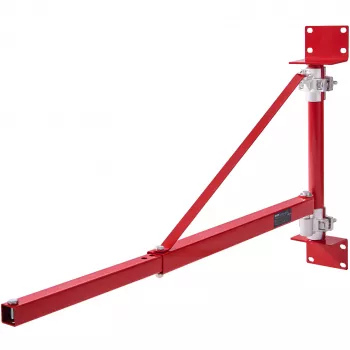
Heavy-Duty Electric Hoist Support Arm is a dedicated option for setting up a fixed hoist station in a garage or workshop. It’s best suited for users who want a straightforward way to mount an electric hoist while keeping lifting operations organized. Before installation, confirm compatibility with the intended hoist and mounting surface, including fastener and anchor ratings.
Helpful shop add-on
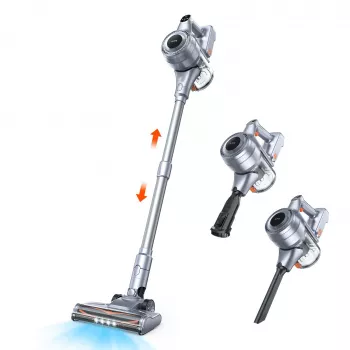
After handling engines, gearboxes, or dusty parts, cleanup is part of the workflow. A compact tool like the Powerful Cordless Handheld Vacuum Cleaner with LED Light & 40-Min Runtime can help keep the lifting area clear of debris that could become a slip hazard or interfere with stable footing during a pick.
FAQ
Can a hoist support arm be mounted to a wall stud?
Only if the stud structure and reinforcement are engineered for lifting loads, not just light shelving. Use rated fasteners/anchors and reinforcement such as backing plates where appropriate; many safe installations require mounting to concrete, a column, or a reinforced frame.
What causes a support arm to bend or feel unstable during lifting?
Common causes include side loading (pulling at an angle), exceeding rated capacity (including rigging weight), an inadequate mounting surface, or undersized/low-grade hardware. Correct the lift path to stay vertical and verify the structure and fasteners can handle the forces involved.
How often should a hoist arm and mounting hardware be inspected?
Do a quick check before each use for looseness, damage, or shifting at the mount. For regular use, perform more detailed inspections periodically (often monthly) and re-torque fasteners according to the manufacturer’s guidance.














Leave a comment