125mm f/10 GoTo Schmidt-Cassegrain with StarBright XLT
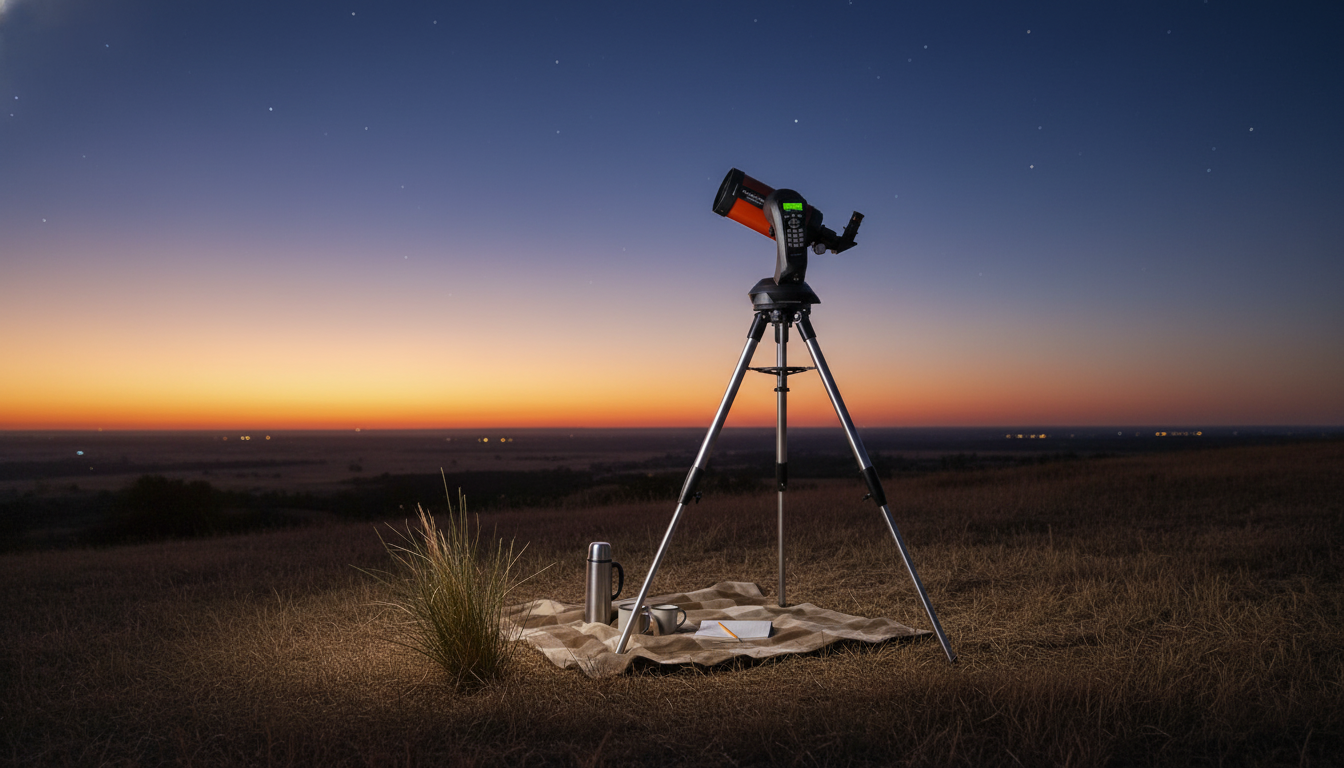
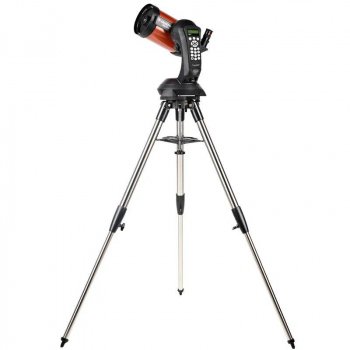
125mm F/10 Schmidt-Cassegrain Computerized GoTo Astronomical Telescope with StarBright XLT
A 125mm Schmidt-Cassegrain with computerized GoTo and StarBright XLT coatings balances portable size with serious reach for lunar, planetary, and bright deep-sky viewing. This guide breaks down what the 125mm f/10 design does well, what to expect at the eyepiece, and how to get a smooth first night under the stars.
What this telescope is designed to do
A 125mm (5-inch class) Schmidt-Cassegrain is built around a long effective focal length in a compact tube, making it especially strong for detailed targets and convenient nights in the backyard.
- Delivers high-contrast views of the Moon and planets with enough aperture to resolve fine lunar detail and show major planetary features under steady seeing.
- Reaches many brighter deep-sky objects (star clusters, nebulae, brighter galaxies), especially from darker skies; light pollution will reduce faint detail regardless of optics.
- Computerized GoTo helps locate targets quickly after alignment, reducing time spent star-hopping and increasing time observing.
- The compact Schmidt-Cassegrain optical tube is easier to transport and store than many similar-aperture reflectors, while keeping a long effective focal length.
If you want a ready-to-run setup with automated target finding, the 125mm F10 Schmidt-Cassegrain Computerized GoTo Astronomical Telescope with StarBright XLT is a natural fit for nights focused on the Moon, planets, and brighter showpiece objects.
Key specifications at a glance
Specs matter most when they connect directly to what you’ll see and how easy it is to get there. A 125mm aperture is a meaningful jump from entry-level sizes, while f/10 tends to make magnification easy to reach with common eyepieces and keeps edge-of-field performance forgiving.
- Aperture and focal ratio drive what can be seen: 125mm gathers substantially more light than entry-level 70–90mm scopes, while f/10 supports comfortable magnification with common eyepieces.
- StarBright XLT optical coatings are intended to improve light transmission and contrast compared with basic coatings, supporting brighter, more detailed views.
- A computerized GoTo mount relies on correct leveling, time/location, and alignment for accurate pointing and tracking.
Core specs and what they mean
| Specification | Value | Practical impact |
|---|---|---|
| Aperture | 125mm | More detail and brightness than smaller beginner scopes; still portable. |
| Focal ratio | f/10 | Naturally high magnification range; forgiving on eyepiece performance. |
| Focal length | 1250mm (125mm × 10) | Higher magnification with longer focal length eyepieces; narrower true field than short-tube designs. |
| Optical design | Schmidt-Cassegrain | Compact tube with long effective focal length; benefits from cooldown and collimation checks. |
| Coatings | StarBright XLT | Enhanced transmission/contrast to support faint detail and sharper-looking views. |
| Mount control | Computerized GoTo | Automated target locating and tracking after alignment. |
For an overview of how this optical layout works, see the Schmidt–Cassegrain telescope (overview). For practical magnification guidance, Sky & Telescope’s equipment basics is a reliable reference.
First-night checklist for a smooth setup
A little preparation prevents most “my GoTo is off” and “why is everything blurry?” frustrations. The good news: once a routine is established, it becomes quick and repeatable.
- Allow thermal equilibration: set the telescope outside 30–60 minutes before high-power viewing to reduce soft, “boiling” images caused by temperature differences.
- Confirm power stability: use a fully charged power source or reliable external supply; low voltage is a common cause of GoTo glitches and slewing errors.
- Enter accurate time, date, and location: small errors can lead to large pointing errors, especially at higher magnifications.
- Start with low power: begin with a longer focal length eyepiece to center alignment stars and targets, then increase magnification once tracking is solid.
- Focus carefully: fine focus is critical at f/10; use a bright star to confirm sharp focus before moving to planets or tight double stars.
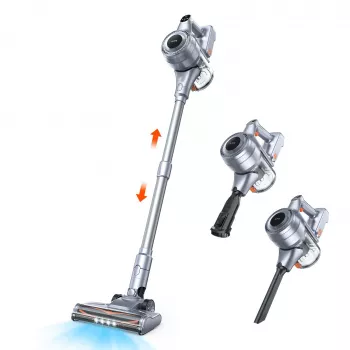
For keeping the observing area tidy (especially around tripod legs on patios, decks, or driveways), a compact tool like the Powerful Cordless Handheld Vacuum Cleaner with LED Light & 40-Min Runtime can be a practical add-on for quick cleanup of dust and small debris before you set up.
What to expect when observing
This 125mm class is a “detail-first” telescope: it shines when you lean into crisp focus, steady tracking, and patient observing.
- Moon: crisp crater rims, rilles in favorable lighting, and high-contrast terminator detail; use moderate power for the sharpest results.
- Jupiter: cloud band structure and the Galilean moons; finer detail depends heavily on atmospheric steadiness.
- Saturn: rings and Cassini Division when conditions cooperate; Titan is often visible from suburban skies.
- Mars: best near opposition; polar cap and darker albedo markings may appear with excellent seeing.
- Deep-sky: open clusters and globular clusters show well; bright nebulae benefit from darker skies and, where compatible, narrowband filters.
A helpful expectation to set early: even excellent optics can’t overcome poor transparency or unsteady air. On nights of average seeing, dropping magnification slightly often makes the view look sharper and more contrasty.
GoTo alignment and tracking tips
Care, maintenance, and long-term performance
Who this 125mm f/10 Schmidt-Cassegrain fits best
FAQ
How much magnification can a 125mm f/10 telescope use effectively?
Useful magnification depends mostly on atmospheric seeing, but a 125mm scope often performs best from moderate to mid-high power on most nights. Pushing higher can help during steady conditions, yet “more magnification” can quickly become dimmer and softer if the air isn’t stable.
Does a computerized GoTo telescope track objects automatically?
Yes—after a successful alignment, the mount can track objects as Earth rotates so targets stay in view longer. Tracking quality depends on accurate alignment, stable power, and a solid, level setup.
What does StarBright XLT change in real observing?
Enhanced coatings improve light transmission and perceived contrast compared with basic coatings, helping views look a bit brighter and more defined. The benefit is most noticeable on subtle planetary contrast and on faint deep-sky objects where every bit of throughput helps.














Leave a comment