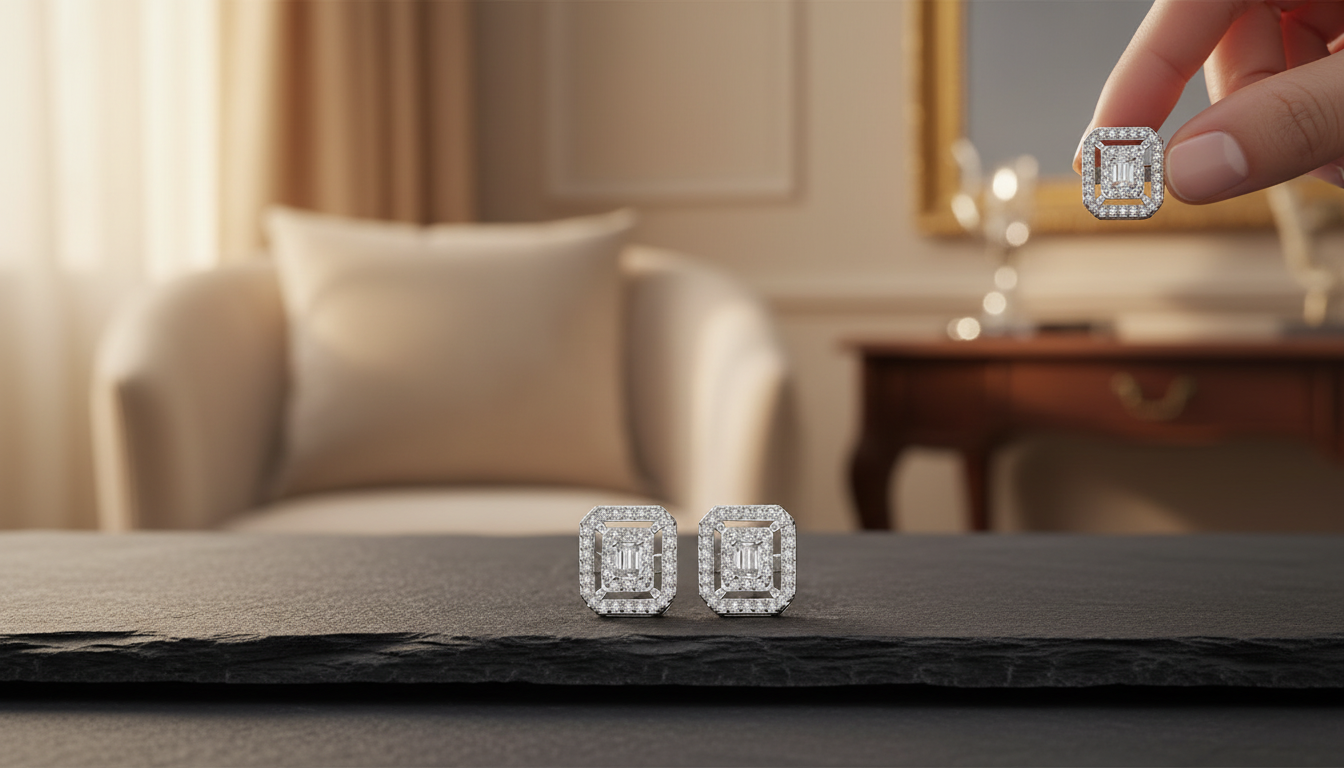
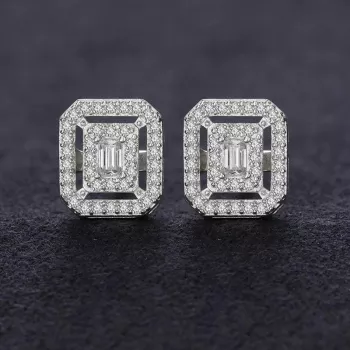
Square-cut moissanite stud earrings bring crisp geometry and bright fire to a simple silhouette that works for weekday errands, office looks, and dressed-up nights. The sharp outline gives a modern, “architectural” feel, while the stud setting keeps everything streamlined and easy to wear. Below are the key differences that make square studs stand out, what to check for quality and comfort, and simple ways to style and care for them so they stay brilliant.
Square stud earrings (often princess-cut or square radiant-style stones) highlight straight edges and clean corners, creating a bolder look than many rounded shapes. Those linear facets can read as mirror-like flashes as the earrings catch light, especially when the cut is precise and well-centered.
Because the stone’s outline fills space with strong edges, square studs can appear larger than a round stone of a similar carat weight. Add the fact that stud settings sit close to the ear, and the result is a polished profile that looks intentional rather than fussy. Square studs also play well with structured outfits—think blazers, crisp button-downs, monochrome sets—and they layer nicely in stacked piercings.
Moissanite is a lab-created gemstone known for high brilliance and a lively rainbow “fire” in many lighting conditions. Diamonds can look equally striking in stud earrings, but they often present more white sparkle and comparatively subtler rainbow flashes, depending on the cut and the environment. Neither look is “better”—it’s about the style of sparkle you enjoy, your budget, and material priorities.
It’s also worth confirming labeling and descriptions. Moissanite is not diamond, and reputable listings should clearly identify the stone type and any metal stamps or materials. For a helpful overview of similarities and differences, see GIA’s guide on diamond vs. moissanite. For labeling and marketing rules in the U.S., the FTC Jewelry Guides are a solid reference.
| Feature | Moissanite | Diamond |
|---|---|---|
| Sparkle character | High brilliance with strong fire (more rainbow flashes) | High brilliance with typically subtler fire |
| Hardness (scratch resistance) | Very high (Mohs 9.25) | Extremely high (Mohs 10) |
| Typical value | Generally more accessible price for larger looks | Higher cost, especially as size and quality increase |
| Care needs | Routine cleaning keeps maximum sparkle | Routine cleaning keeps maximum sparkle |
If you’re curious about what those hardness numbers mean in practical terms, the Encyclopaedia Britannica explanation of the Mohs scale provides useful context.
Cut quality is the biggest driver of sparkle. With square stones, symmetry and facet alignment are especially noticeable because the human eye quickly picks up uneven corners or a “tilted” appearance. A well-cut square stone tends to return light evenly, producing crisp flashes that complement the sharp outline.
Corners matter for durability, too. Because square studs show corners clearly, secure prongs and balanced construction help protect the stone and maintain that clean silhouette. Some designs slightly bevel the corners or use a protective setting style to reduce snagging on sweaters, towels, and hair. If you want the most low-maintenance daily wear, prioritize a setting that shields corners without hiding too much of the stone.
The setting style affects both sparkle and comfort. Prong settings are popular because they allow more light to enter the stone, boosting brightness. Bezel settings wrap the perimeter in metal, creating a sleek frame with extra protection—an excellent option if you’re hard on jewelry or frequently wear knits and scarves.
Comfort comes down to details that are easy to overlook:
For a streamlined everyday option that fits the “clean lines, maximum sparkle” vibe, see the Square Moissanite Diamond Stud Earrings.
Moissanite can look very diamond-like, especially in well-cut stones and classic stud settings, but it often shows more colorful rainbow fire than diamond. Lighting and stone size can make that difference more noticeable.
Yes, when the setting sits low and the post length is right for your ear. Comfort also depends on the backing type (friction vs. screw backs), the stud size you choose, and whether the metal is suitable for sensitive skin.
Use mild soap, warm water, and a soft brush, then rinse well and dry with a lint-free cloth. Avoid harsh chemicals and check prongs and backs occasionally to ensure the stones stay secure.




Leave a comment