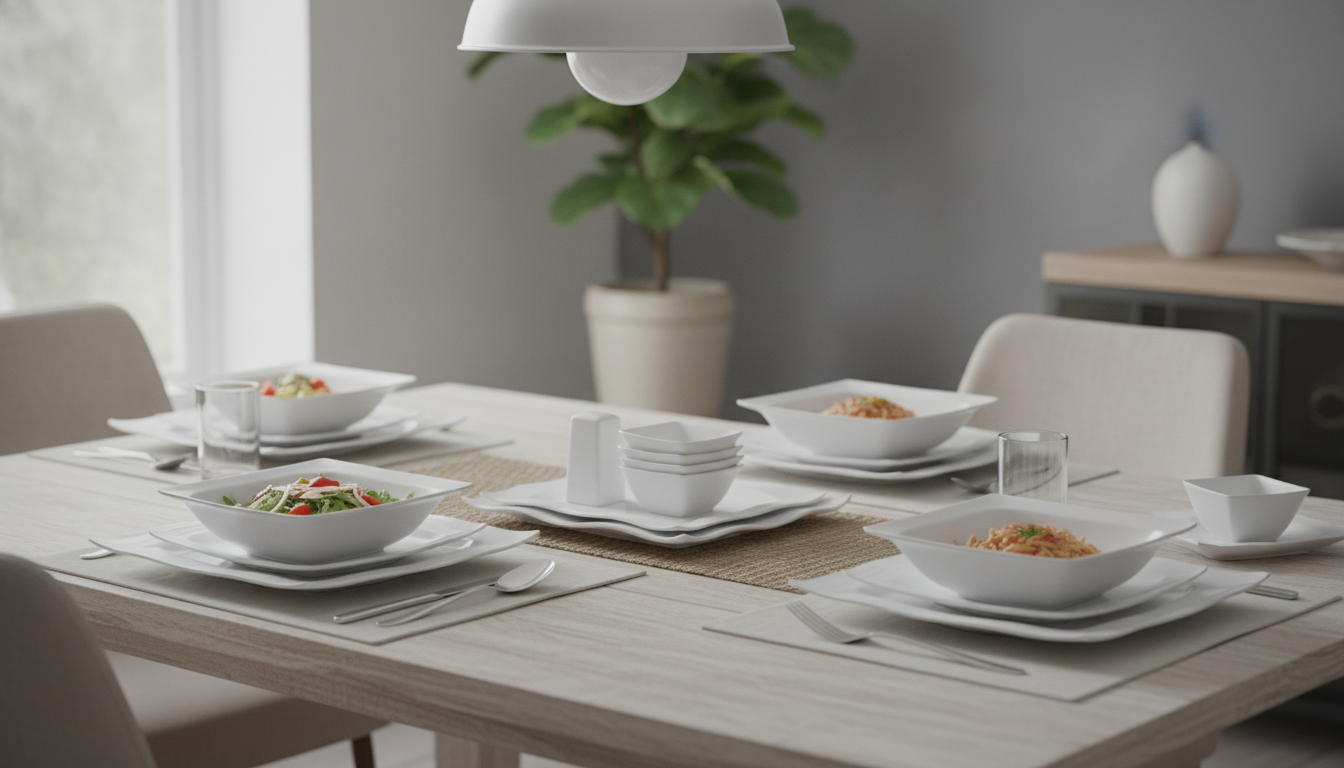
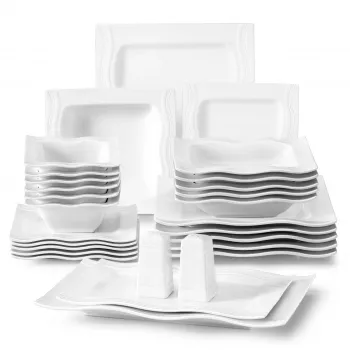
A square porcelain dinnerware set brings crisp lines to the table while keeping the practical strengths people count on from classic porcelain: a smooth glazed surface, an elevated feel, and an easy-to-style neutral look. A 28-piece set is a smart “daily driver” for breakfast through dinner, with enough matching pieces to make weeknight meals feel pulled together and weekend hosting look intentional without turning formal.
If you’re building a coordinated tablescape, start with the 28-Piece Square Porcelain Dinnerware Set, then finish the setting with a countertop accent like the Japanese Ceramic Oil Dispenser – Retro Soy Sauce & Vinegar Pot for dressings, oils, or soy sauce at the table.
Most 28-piece square sets are designed to create a cohesive table setting, with the same silhouette and finish repeating across courses. That consistency matters: even simple food looks more composed when every piece shares the same geometry and glaze.
A 28-piece configuration is commonly arranged for service for four, with multiple piece types per place setting. Square profiles also add visual structure for plating—especially for salads, pasta, and composed mains—because straight edges frame ingredients and sauces in a clean, modern way. As a material, porcelain is typically non-porous once glazed, which helps resist absorbing odors or stains with normal use (a helpful everyday advantage for tomato sauce, coffee, and spice-forward meals).
| Piece type | Pieces | Typical use |
|---|---|---|
| Dinner plate | 4 | Main course, large entrées |
| Salad plate | 4 | Appetizers, desserts, small lunches |
| Bowl | 4 | Soup, cereal, ramen, pasta bowls depending on depth |
| Mug or cup | 4 | Coffee, tea, cocoa |
| Additional matched pieces | 12 | Often extra bowls/plates or specialty pieces depending on the set |
Because the exact assortment can vary, it’s worth scanning the full list on the product page before committing—especially if you prefer deeper bowls for ramen or pasta, or if you want extra salad plates for desserts.
Square porcelain reads contemporary without being loud. The clean edges and flatter rims create a modern presentation that pairs naturally with today’s kitchens—whether your style leans minimalist, Scandinavian, or warm contemporary.
For casual hosting, the biggest win is consistency: when plates, bowls, and mugs match, you can keep the rest of the table easy—one centerpiece, simple napkins, and you’re done.
Porcelain is fired at high temperatures, typically producing a smooth, hard surface with a refined look and a lighter feel than many stoneware options. For a quick overview of what sets it apart, Encyclopaedia Britannica’s background on porcelain is a helpful primer on how the material is made and why it’s valued.
| Material | Look & feel | Common strengths | Common tradeoffs |
|---|---|---|---|
| Porcelain | Smooth, refined, often lighter | Non-porous surface, elevated look | Edges may show chips if impacted |
| Stoneware | Heavier, artisanal, rustic-modern | Warm aesthetic, substantial feel | Can be bulkier in cabinets |
| Earthenware | Traditional, often thicker glaze | Cozy, decorative patterns | More porous; can be less durable |
| Tempered glass | Clean, minimalist, translucent/opaque | Often chip-resistant, lightweight | Different tactile feel than ceramics |
If your goal is a modern, streamlined table that still feels classic, porcelain tends to land in the sweet spot: polished enough for guests, practical enough for everyday use.
Square dinnerware looks sharp on the table, but it can behave a little differently in storage and cleaning. A few practical checks help avoid surprises once it’s in your cabinets.
For kitchen sanitation basics and best practices, the USDA Food Safety and Inspection Service provides guidance on cleaning routines and dishwasher use at fsis.usda.gov.
To complete the tabletop, a compact pourer like the Japanese Ceramic Oil Dispenser – Retro Soy Sauce & Vinegar Pot adds function and style—ideal for olive oil, vinegar, or a homemade vinaigrette that guests can serve themselves.
Yes. Glazed porcelain is typically non-porous and easy to clean for daily meals, and it holds up well with normal handling. Durability still depends on thickness, how it’s stored, and avoiding hard impacts on corners or edges.
Usually, yes, but square rims may need a little more spacing in dishwasher racks and can take slightly more shelf room than round plates. Measuring cabinet depth and checking your rack layout helps confirm a comfortable fit.
Many 28-piece sets are designed as service for four with multiple piece types per place setting. The exact composition varies by set, so it’s best to confirm the itemized list on the product page.


Leave a comment