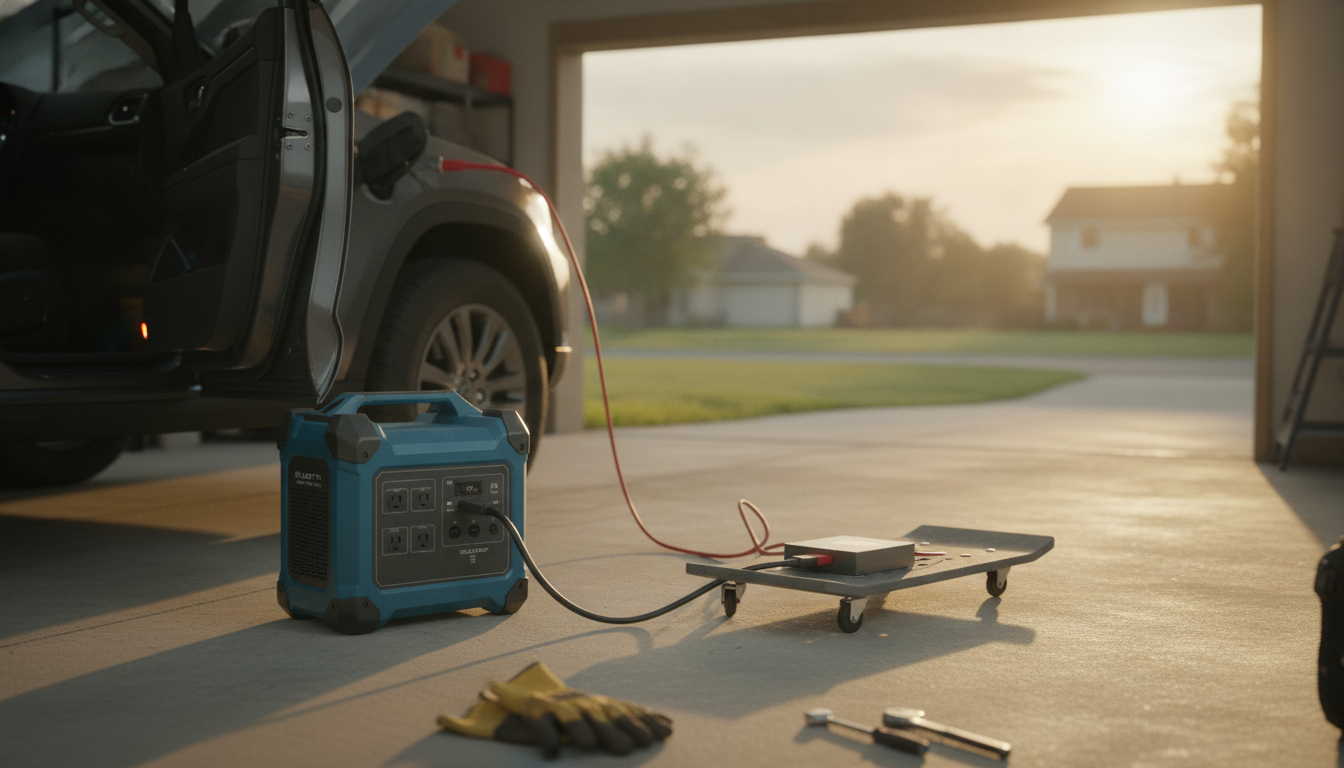
Yes—many portable power stations can be charged with a DC to DC charger, as long as the charger’s output voltage, current, and connector type match what the power station’s DC input is designed to accept. A DC to DC charger is commonly used for vehicle-based charging (starter battery or alternator to an auxiliary battery system), and it can also work for certain power stations when the unit supports regulated DC input (often through an “car input” port or an XT-style connector).
The key is that a DC to DC charger outputs a controlled charging profile (typically for lead-acid or lithium batteries). Some power stations prefer a simple regulated DC input (for example, 12V/24V at a specified amperage) rather than a multi-stage battery charger output. If the power station’s manual lists “DC input” parameters and your charger can be set to those parameters (and the polarity is correct), it can be a practical way to charge while driving.
Start with the power station’s DC input rating: allowable voltage range, maximum input wattage, and maximum current. Then confirm the DC to DC charger can be configured to stay within those limits. If the charger can exceed the power station’s maximum input wattage, the power station may refuse the charge, trigger protection, or—in worst cases—risk damage.
Also verify the connector and wiring. A common issue is using thin cable or long runs that cause voltage drop; the power station may show “charging” intermittently or at a much lower rate. Use appropriately sized wire, proper fusing near the source battery, and a secure connector that won’t loosen with vibration.
DC to DC charging is especially helpful if you’re building a hands-free, vehicle-supported power setup for camping, work, or emergency readiness. If you’re also pairing DC charging with solar, a compact power station designed for portable use can simplify the whole system. For a practical example of a lightweight LiFePO4 setup, see the main guide here: https://idyllie.com/guide-268-8wh-lifepo4-handsfree-solar-backpack-power-station/.
It can, if the charger has a LiFePO4 mode or programmable settings that match LiFePO4 charge voltage and current limits. Using the wrong profile may reduce lifespan or cause the battery’s BMS to disconnect under protection.





Leave a comment
You must be logged in to post a comment.