Bluetooth Bone Conduction Pillow Speaker for Quiet Sleep
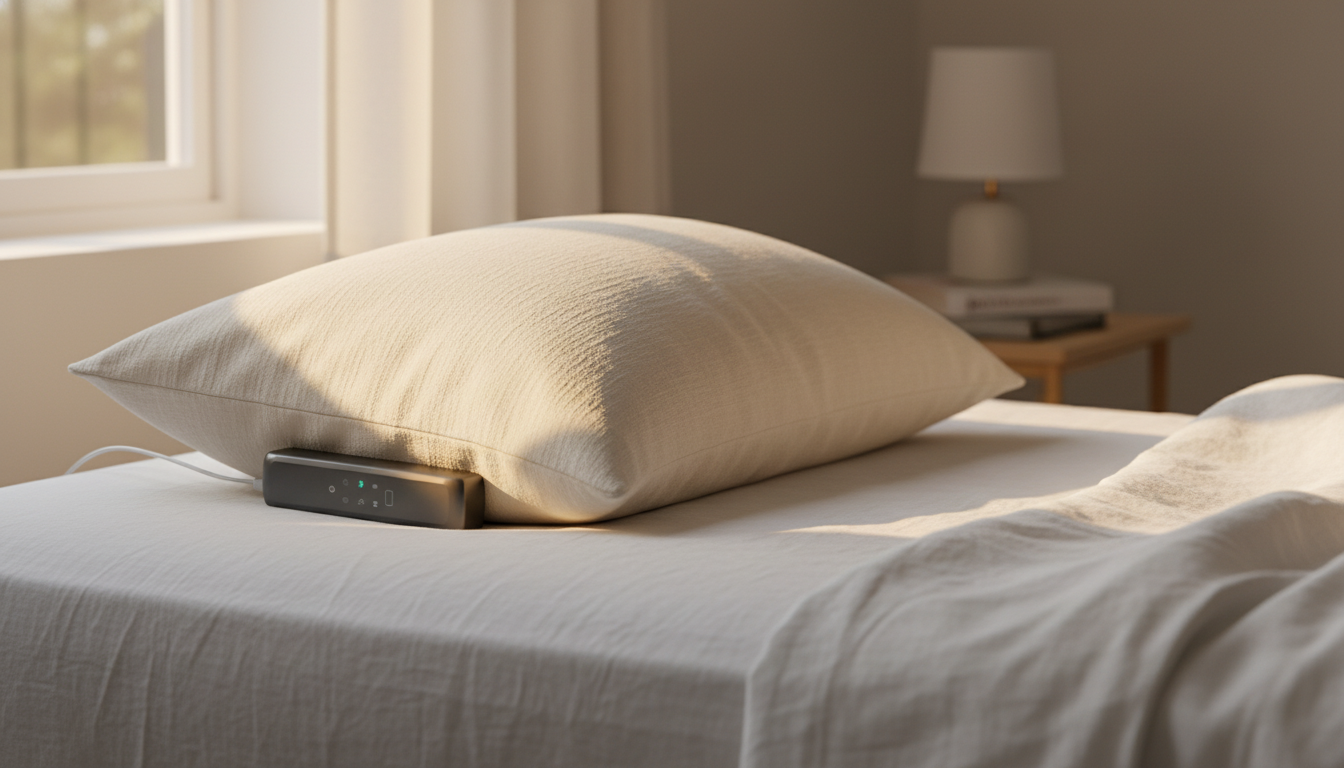
Bluetooth Bone Conduction Pillow Speaker – A quieter way to fall asleep with audio
A compact under-pillow sound box can make bedtime audio feel more personal and less intrusive. The Bluetooth Bone Conduction Pillow Speaker – Wireless Sleep Sound Box with Timer uses vibration that travels through your pillow surface, helping you hear podcasts, white noise, or guided meditations without filling the whole room with sound. With Bluetooth pairing and a built-in shutoff timer, it’s designed for a consistent wind-down routine that doesn’t require sleeping in earbuds.
What this sleep sound box is designed to do
- Provide private listening for podcasts, white noise, meditation tracks, or audiobooks without wearing earbuds
- Reduce disturbance for partners or roommates by keeping sound localized near the pillow
- Support hands-off bedtime routines using wireless playback and a shutoff timer
- Stay simple: place it under or near a pillow and connect via Bluetooth
It’s a practical fit for nightly “set it and forget it” listening—especially for people who dislike the pressure of in-ear buds or who wake up easily when a phone speaker is playing across the room.
How pillow-based bone conduction audio works
Traditional speakers rely on pushing sound waves through open air. Pillow speakers work differently: vibration transfers through the pillow material and into the listener’s head at the contact point, so the perceived sound can be clearer to the person on the pillow while staying quieter to others nearby. Bone conduction in medical contexts is a broader concept used for hearing and assistive devices; this type of sleep speaker borrows the idea of vibration-based sound transfer in a bedtime-friendly form factor (learn more background at Cleveland Clinic).
- Instead of projecting sound mainly through open air, the device uses vibration that transfers through the pillow material to the head
- Perceived volume depends on pillow thickness, fill type (foam vs. fiber), and placement
- Best results typically come from positioning the speaker close to where the cheek/ear rests on the pillow
- Compared with regular mini speakers, this approach can feel quieter to others while remaining clear to the listener
If you use white noise for masking, keeping the sound localized can be helpful. For an overview of how white noise may affect sleep, see Sleep Foundation: White Noise and Sleep.
Key features that matter at night
- Bluetooth wireless connection for pairing with phones and tablets from the bedside
- Timer function to stop playback automatically after a chosen interval
- Low-profile shape intended for under-pillow or bedside placement
- Useful for multiple audio types: white noise, calming music, guided breathing, and spoken-word content
- Helps avoid pressure and discomfort associated with sleeping in earbuds or over-ear headphones
Feature snapshot
| Feature | Why it helps for sleep |
|---|---|
| Bluetooth playback | Keeps the nightstand uncluttered and avoids tangled cables |
| Shutoff timer | Reduces overnight playback and supports consistent sleep routines |
| Under-pillow vibration transmission | Keeps sound more personal and less room-filling |
| Compact form factor | Fits into small bedside setups and travel bags |
Bluetooth connectivity also means easy switching between sleep playlists and spoken-word apps. If you’re curious about how Bluetooth devices communicate and stay compatible, the Bluetooth SIG offers a high-level specification overview.
Setup and placement tips for clearer sound
- Pairing: Enable Bluetooth on your phone/tablet, select the device in the Bluetooth list, and confirm connection before starting audio.
- Placement: Start under the pillow near the top corner; adjust a few inches at a time to find the clearest spot.
- Pillow choice: Very thick pillows may dampen vibration; thinner pillows or firmer foam often transmit more detail.
- Volume: Begin at low volume, then raise gradually—vibration transfer can feel louder once you’re fully settled.
- Timer: Set the timer slightly longer than your typical time-to-sleep to avoid abrupt cutoffs.
A simple approach is to start with a calm baseline track (steady white noise or soft ambient music), then refine placement. Moving the unit closer to the edge where your ear rests usually increases clarity without requiring a big jump in volume.
Who it suits (and when to consider alternatives)
- Good fit for: Side sleepers who dislike earbuds, light sleepers who want consistent background sound, and shared bedrooms where one person listens and the other sleeps.
- Travel use: Helpful in hotels or unfamiliar environments where a quiet masking sound is desired.
- Consider alternatives if: Extremely high volume is required, the pillow is very thick and muffles vibration, or a full-room sound machine is preferred.
Care, safety, and bedtime comfort
Common issues and quick fixes
Optional add-ons for a calmer bedroom setup
If bedtime routines include tidying up crumbs, dust, or pet hair that can make a bedroom feel less comfortable, a compact cordless cleaner can be useful alongside sleep audio. The Powerful Cordless Handheld Vacuum Cleaner with LED Light & 40-Min Runtime is an easy grab-and-go option for quick nightly touch-ups—especially around nightstands and under the bed where debris tends to collect.
FAQ
Can a pillow speaker replace earbuds for sleeping?
For many people, yes—especially if earbuds feel uncomfortable or create pressure in the ear while side sleeping. Clarity and loudness depend on pillow thickness and placement, so start with moderate volume and use the timer to avoid playing audio all night.
Will it bother someone sleeping next to me?
Vibration-based transmission can keep sound more localized than a phone speaker, but some vibration can still transfer through shared bedding. Lowering the volume and shifting the unit closer to your pillow edge usually helps, and it’s best to test placement together.
Where should the speaker be placed for the best sound?
Place it under the pillow near the top corner, close to where your ear or cheek rests, then adjust in small increments until it sounds clearest. Very thick pillows can dampen vibration, while thinner or firmer pillows often transmit more detail.















Leave a comment